

The Largest Challenge Is Communications

In this interview Anastasia Kazakova talked to Lenyo Lee, JetBrains Regional Sales Manager in China and the Chinese-speaking market, and also the General Manager of the JetBrains Shanghai office. They discussed her career from developer to regional market manager and the best way to connect European and Chinese cultures.

Anastasia: Hi Lenyo, tell us about your path to JetBrains.
Lenyo: It has been an adventure! When I joined JetBrains in 2014, I was the first regional sales representative, starting as a one-person team and taking care of all kinds of tasks in Greater China, from business development and sales support to marketing activities – you name it. The team has grown over time, and now we have talent who are professionals in each field and take care of our local activities. In 2021, when we established JetBrains Shanghai, my role was further expanded to GM and I started handling business operations, as well.
My education and career path worked out very well and helped me to get here, but it was definitely not planned intentionally. At least for me, it was not possible to plan the path. :)
Nowadays children are growing up with electronic devices and learning programming at a young age. As a small-town girl I did not consider nor ever imagine going into this industry. At age 15, I was interested in foreign languages and had no clue about programming languages. At the time, vocational school was popular and I was keen to join a foreign language program, but fierce competition pushed me to the back of the line. When I was turning in the application, my favorite language school was full and I had to make a decision on the spot. So my parents decided to choose a program that they thought could also lead to a bright future – information management.
Many students from my first class didn’t continue on professional tracks related to their degrees. A lot of self-exploration happens during that age and we only discover our strengths later. Luckily my “math and logic” brain served me well and I took a job as a programmer after I graduated. It was a small company. I was basically doing everything, like focusing on back-end development but also doing some front-end stuff. Bringing together website functionality and designs that will display the final product the way customers desire. I worked for four or five years as a developer like that. That was my first job. I was not expected to express ideas about the customer journey or what the workflow should look like, but I started feeling that it would be better if I were able to do so.
I realized I could continue working as a developer for another five plus years to be able to become a project manager to really lead and design the project. Or I could go and get another degree to gain a deeper understanding and knowledge of this area and have something backing me up, something that can be taken seriously by the management. So I selected an International MBA degree.
I had never lived abroad at that time. And this was an international program, meaning that we have a lot of international students and the school provides exchange programs for you to go abroad to experience life and take some classes. So I did that for about five months. And I went to the Czech Republic, to a small city called Ostrava, and took a few classes and traveled around Europe as much as possible. It definitely broadened my views with cultural experiences.
When I came back, I completed my thesis for the MBA degree. It was a research project about how Facebook influences your decisions or decision-making process. That was quite interesting and also helped me step into the marketing field.
After receiving the MBA, I started my job as a project manager, which lasted for about one year, and working with Chinese customers was a part of my job at the time. With the work experiences and my international MBA degree, I started thinking about other opportunities to continue to broaden my view, and that’s why I looked for jobs in Europe. The Czech Republic was my first option because I was there, I knew the lifestyle, the cost of living, and I had friends there. That’s how I found JetBrains.
Anastasia: That is really an impressive journey! You’ve tried so many things, went through the whole spectrum, learned how all these positions worked, and took the sales role at JetBrains in the end. Why did you select sales? What attracted you to that?
Lenyo: That’s a good point. Speaking of my skills in programming: When doing my Facebook research, I was not writing quality code. I wasn’t trying to improve how I coded, but I was focusing more on the result, which I could analyze and decide how this result might affect our decision-making process and how we could implement a marketing strategy. That was more interesting to me than the joy of coding. And the job at JetBrains was an opportunity to switch more to the marketing and sales sides. It was even more interesting because it was about overall operation strategy. I was like one person covering customer support and planning marketing, as well as going to conferences. So that was a little bit of everything, and I was happy to execute my own version.
But I knew there were professionals who could do a better job in each specific area and I tended to find the right resources to help me execute it properly. A marketing manager joined us, and the whole team continued to grow. And then I moved up to General Manager for China. I’m still doing the same things: focusing on growth, planning the overall strategy, bringing people and resources together, and analyzing the market. I’m looking for opportunities for us to move forward and figuring out what has to be done on the sales and marketing sides to execute those opportunities.
Anastasia: Do you feel that your developer background helps you in your job?
Lenyo: It definitely helps, as I understand the pain points of our customers and their day-to-day work. Although technology has evolved and I don’t necessarily use all of our tools, I understand the concept. And a friendly relationship with customers can be easily established when you understand their communication on a fundamental level, when you understand their mindset and speak their language.
Anastasia: You had this diverse education and experience of living in Europe, so you have probably encountered many cultural differences between China and European countries. Do you see this as a benefit and does it help you with your job?
Lenyo: Yes. I became a better communication channel for the two different cultures. And now, when European colleagues come to visit China, I can predict the pain points and address the lifestyle inconsistencies. All the small things that ensure a certain level of comfort for the trip and help the team perform well during the events, customer meetings, and so on.
When defining culture differences, we often describe China as a highly collectivist culture. In practice, this is directly reflected in customer meetings and conferences. Speakers’ ice-breaker questions might need some “arranged responses” to help warm up quickly. Then, normally after the first couple responses, participants will be more relaxed to jump into the discussion and open to making comments.
Sometimes things might seem like common sense, but you don’t want to fail because of the differences between cultures and in how both sides perceive respect. For example, exchanging business cards is still appreciated in a formal meeting with upper management, but not so much in a technical discussion with a development team – they might even forget to introduce themselves. One time we had an online meeting with a group of developers from a large local IT company. During that call we failed to ask the customer to introduce the whole team on their side. We only introduced ourselves. Afterwards, our European team members expressed their frustrations that they didn’t know who they were talking to. And also during the meeting, some parts went on in Chinese, and we weren’t able to translate everything, so our participants on the JetBrains side felt uncomfortable.
Office hours, as a part of work culture, also have a direct impact on meeting arrangements. You might have heard of the long working hours in Chinese IT companies.In such an environment, people often take a much-needed nap during lunch time to recharge. So during lunch time you will see people sleeping on their chairs with their face down on the table, lying on a couch in the public zone, or lying on the meeting room floor. It might be hard to have a productive conversation before 2:30 pm, but you might be able to set up a meeting after 6:00 pm.
Apart from the business side, trip arrangement is also a fun task and requires a lot of attention. Here’s one situation that led to a big culture shock for our European team. After a long day of travels and customer meetings in China, we all wished to have a nice cold beer and relax in a nice hotel, but the hotel staff told us they only had room temperature beers. Apparently, you had to make a specific reservation for your ice cold beer, otherwise, you wouldn’t get one! It is also interesting to see how restaurants in the US always offer you water with ice, whereas hot tea is the standard here in China.
Anastasia: I guess your experience opened many choices for you – you could select a European company or a US company and move over there, or you could stay in Asia. Was your choice to combine a European company with a position responsible for the China region intentional?
Lenyo: My initial idea was that maybe later I would move to Europe, because I like the lifestyle and the working environment there. Then I got an opportunity to work at JetBrains, and despite my original wish, I saw that it would be more beneficial both for the company and for me if I stayed in Asia. So I thought, okay, I can take a step back, as moving to Europe is not my ultimate goal. I started working from home and traveled to mainland China for conferences and for business trips. It does help with business development for sure, because it is easier to visit customers, trips are shorter, and I have the same timezone and so am able to manage customers better. I think I made the right decision to stay in Asia, for my career and for the JetBrains business development, and now I don’t necessarily want to relocate to Europe. JetBrains makes life balance possible, and I really appreciate it.
Looking back, it was never really about choosing to work in a European, US, or Asian company. For me it was always more about relating myself to a company’s core values and believing in what I do. At the time, JetBrains seemed like a cool company, and now I’m proud to be working with a group of cool people doing cool things. :)
Anastasia: What are the challenges for international companies like JetBrains on the Chinese market, and how do you help address them?
Lenyo: One of the challenges is communication and content delivery. You have to use the local channels and speak the local language to make sure you deliver the content in a way people here will accept. We had a good start when I joined, as we already had a local blog. And then the marketing manager joined, and we started running local WeChat accounts, supporting local social media presence and initiating website localization.
Another challenge is that, if you’re not established locally, you have to rely on your third-party partners to operate your resources, like – again – websites and social media. And you really need to have strong and reliable partners to do that. Many software companies, when entering China, work through local distributors covering the region. In return they have to pay high commissions to these distributors to be able to cover all the work that they are delivering. JetBrains’ products are unique and require a lot of resources so we have always been trying to operate and do all the marketing work on our own.
Anastasia: Are local Chinese companies more oriented to the local vendors? How hard is it to persuade them to try tools made by a European company?
Lenyo: For IDEs, there are not so many local alternatives, because our tools are that powerful. But for team tools, there are many local replacements, with localization, good documentation, local sales supply and technical support, which make things much more challenging for us. Chinese users definitely prefer local-made products. So with our team tools, we plan to involve our partners here and work hard on getting these tools adopted here. But on the other hand, if a company already uses JetBrains IDEs, it’s a good chance for us to promote our team tools to them, as well. They are then easier to sell.
Anastasia: As far as I know, the software market in China is suffering from high piracy rates. Do you see this as a challenge and what are you doing about it?
Lenyo: We are doing regular checks on the market to understand what methods are being used to pirate products. If it’s via a crack, we send the information to the product team to verify if it’s a new leak or something we’ve already identified. So this is a continuous communication and improvement channel.
I do see that, for years, the situation with piracy has been improving in China and the country is expressing the need for people to buy licenses and genuine products as it is important for the industry to grow healthily. On the JetBrains side, we are focusing on bringing our values to the developers – not only the product functionality itself, but also good sales support and technical support. And we try to demonstrate that JetBrains is close to local developers. We believe that if we stay close to developers and make direct connections with local communities, they will recognize and appreciate our efforts more.
We take little steps and wait for the overall environment to improve. If a developer is in a group of people cracking the software, then using a legal product is more difficult, and they would be fighting against peer pressure. Our goal is to help. We try to have an influence and make developers comfortable with doing the right thing: supporting the genuine products they use and love. This way, bigger improvements will come sooner.
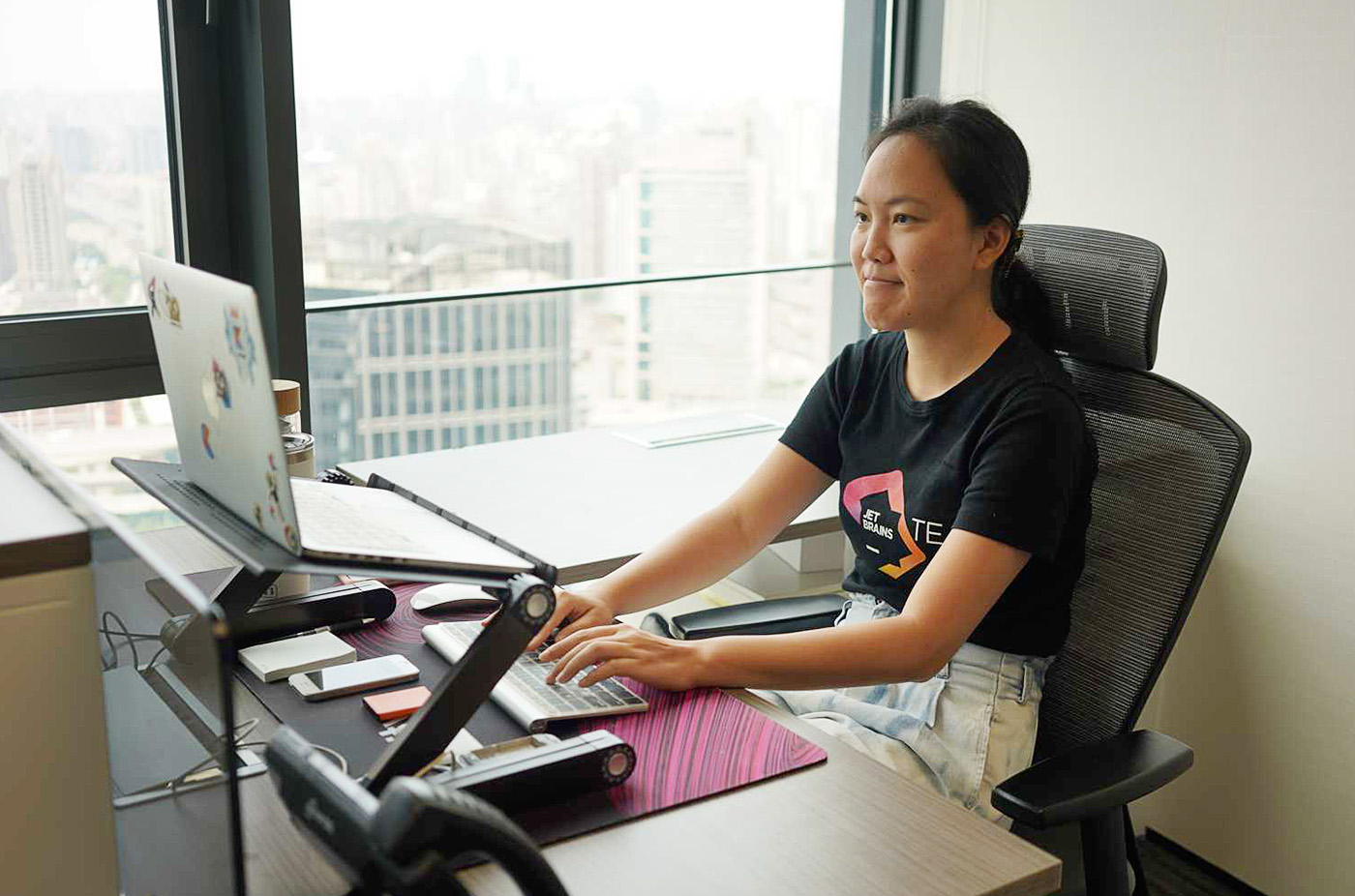
Anastasia: JetBrains has recently started a local office in Shanghai, China. When was that?
Lenyo: It took us a long time to complete all the paperwork because of the pandemic. And then it took us a few more months to do all the required work for the office, before we could finally move in, in July 2021.
Anastasia: Congratulations! And what are the major goals for the new office?
Lenyo: Both internal and external goals are important here. From the business side, it’s better for sales opportunities and for customers to be able to pay in local currency with a local company without having to go through the international process and payments. The purchase process will be smoother and faster with JetBrains Shanghai.
On the team side, internally, it is also important for us to have more control over our websites and social media without the need to involve a third party.
Hiring local talent is now easier as we have an office in China.
Anastasia: You’ve been to many JetBrains locations around the world. How is the Shanghai office different from the others?
Lenyo: There is no one thing that is completely the same in all the offices. They are all different! Talking about space, for example, I went to the New Jersey office and everyone there has their own room. Whereas in Prague, people share office rooms, and something similar happens in Munich. As for Shanghai, currently we are in a co-working space and we have only two big rooms for everyone, including sales, marketing, technical support, accounting, HR, and legal. We now have around 11 people in the office and 3 people remain remote, but we plan to grow to 20 people by the end of 2022. The team is growing but still too small to make it cost-effective to set up our own office to the JetBrains standard. For now, it makes sense for us to stay in this type of co-working space with a shared lounge area, kitchen, and administration service, similar to the early days of the Amsterdam office, which I also visited. But as we continue expanding our local operations, I’m sure we will reevaluate our office plans at some point.

Anastasia: Have you established some new office traditions already?
Lenyo: It’s common in Chinese culture to go out and have meals together. Our HR manager arranged the first outing last fall and took the team to enjoy seasonal cuisine. We ate Yangcheng Lake hairy crabs, walked around the lake, and watched farmers harvest rice. It was a nice way to experience the seasonal changes. We had an amazing time together, so hopefully we can turn this into a good tradition!
Anastasia: Talking about you, what are your responsibilities as the director of the Shanghai office?
Lenyo: This is a new role for me, so I’m still learning. As I see it, my major goal is to make sure JetBrains Shanghai is a success. We have different phases of our plans. After we successfully transfer the ownership of our social media accounts and establish the local official JetBrains website, the next step would be to get our direct sales working. This will require a finance workflow to be set up, a way for us to issue local invoices, and much more.
Another task is working with our internal development team to establish local CNY pricing and local payment methods on our local official JetBrains website, which is essential for our sales operations.
There are many other small things, as you can imagine, like signing contracts with local suppliers, and other arrangements that guarantee JetBrains Shanghai is fully operational.
Anastasia: Thank you, Lenyo! Congratulations to you and your team on launching JetBrains Shanghai, and hopefully we’ll continue to grow in the region with your assistance!

Anastasia Kazakova
Discover more


最大的挑战是沟通
Anastasia Kazakova 这次采访了 JetBrains 在中国和华语市场的区域销售经理兼上海分公司总经理李玥萱。 她们讨论了她从开发者到区域市场经理的职业生涯,以及连接欧洲和中国文化的最佳方式。
Anastasia:你好,玥萱!请跟我们谈谈你加入 JetBrains 的历程。
玥萱:这对JetBrains和我个人来说都是一段探险历程! 在 2014 年加入时,我是JetBrains第一个亚太专属区域销售代表,从一人包办负责大中华区的各种任务,包含业务发展和销售支持到市场营销活动,等等。现在我们的团队不断壮大,有各个领域的专业人士负责各项本地工作和任务。 2021 年,当JetBrains 上海公司成立,我的角色也进一步扩大为上海公司总经理并开始处理公司运营事务。
回头看这段历程,我很感恩在学习教育和职业发展的一路上能够有很好的机遇,帮助我达到今天的成就。但这绝对不是提前就计划好的。 至少对我来说,这条道路是无法计划的。 :)
现在的孩子都伴随着电子设备长大,从小就接触并学习编程概念的孩子也不在少数。 在我小时候那个年代作为一个小镇姑娘,我对这个行业只有很模糊的理解、没有考虑也没有想象过进入这个行业。 15 岁时,我对外语感兴趣但对编程语言毫无概念。 当时,职业学校很受欢迎,我很想学习外语专业,但由于竞争激烈,我的成绩排在后面。 在我申请入学时,我首选的语言学校已经招满,我不得不当场做出决定。 所以,我父母决定选择一个他们认为也能带来光明前途的专业 – 信息管理。
大量的自我探索发生在这个年龄段,我们只有在不断的探索过程中才能发现自己的优势。当时班级内的同学有许多后来并没有继续走与这个学位相关的专业路线。幸好,我的“数学和逻辑大脑”帮助我持续往这个道路前进并在毕业后找了一份程序员的工作。 第一份工作为了经验累积,在一家小公司里我基本上什么都做,比如专注于后端开发,但也做一些前端工作把网站的功能和设计结合起来,以客户希望的方式展示最终产品。 这个模式下的开发工作持续四五年后,我开始觉得如果能够从客户工作流和需求分析阶段就开始参与,在规划方案中贡献自己的想法会更好。
此时我意识到要培养足以胜任这个目标所需要的专业知识,以便能够成为一位项目经理来真正领导和设计项目,可以通过继续在开发岗位上积累五年工作经验,或者可以通过学习进修获取对这个领域更深的理解和知识,并得到客户跟主管的认可和信赖。 最后,我选择了攻读国际 MBA 学位。
那时候我还没有在海外生活过,在这个提倡国际交流的学位课程中,意味着课堂上会有很多国际学生,学校也与海外姐妹校合作提供交流项目,让学生能过去海外修课并体验留学生活。 在攻读学位的期间有5 个月我去了捷克做交换生,在一个叫俄斯特拉发的小城市,上了一些课,并尽可能地结交朋友和在欧洲各地旅行。 这无疑拓宽了我的文化体验和视野。
在学习上,跨国文化在企业管理和市场营销操作上相关的主题特别引起我的兴趣,我的MBA 学位论文是一个关于社交媒体如何影响用户决策过程的研究项目。 理论和实践的结合很有趣,也帮助我对营销领域有更进一步的了解。
获得 MBA 学位后,重新投入职场的我开始担任项目经理的工作,与中国客户合作是我当时工作的一部分。项目经理的工作大约持续了一年,有了工作经验和国际 MBA 学位,我也开始考虑其他机会来继续拓宽我的视野,这就是为什么我开始探索海外工作的可能性。 捷克是当时的第一选择,因为我已经在那里生活过,我知道那里的生活方式、生活成本,而且在那里有朋友。 这就是我如何找到 JetBrains 的。
Anastasia:这真是一个令人印象深刻的旅程! 你尝试了这么多事情,经历了那么多,了解了所有这些职位的运作方式,最后选择了 JetBrains 的销售职位。 你为什么会选择销售? 是什么吸引了你?
玥萱:这是个好问题。 谈到我在编程方面的技能:在做社交媒体研究时,我没有写出高质量的代码。 我没有尝试改进编程方式,但我更关注通过编程所获得的数据结果。我可以利用这些数据分析并反推出如何影响人的决策过程以及如何实施营销策略。 对我来说,这比编程更有趣。 而在 JetBrains 的工作是一个机会,让我能过投入到营销和销售方面。 区域经理的职位甚至更有趣,因为它是关于整体运营战略的工作。在初加入JetBrains的那几年是我一人包办的时代,我负责客户销售支持和规划营销,以及参加展会。 所以我什么都做了一点,我也很高兴能按照自己的方式做事。
但我知道在每个具体领域都有专业人士可以做得更好,并倾向于找到合适的资源来帮助我正确执行。 随着在中国的业务展开,先是一位营销经理加入了我们,再来整个团队也开始逐渐成长。 然后,直到在2021年JetBrains上海公司成立后我升任为中国区总经理。 我仍然在做同样的事情:关注发展的机会,规划整体战略,统筹人员和资源,并分析市场。 我在为JetBrains寻找前进的机会,并弄清楚在销售和营销方面必须做什么来把握这些机会。
Anastasia:你觉得你的开发背景对你的工作有帮助吗?
玥萱:绝对有帮助,因为我了解客户在开发工作中的痛点和他们的日常工作形态。 虽然技术发展日新月异,我也不一定使用我们所有的工具,但我理解概念。 当你了解基本沟通方式,理解其心态并以互通的语言交流时,可以更轻松地与客户建立友好关系。
Anastasia:你有这种多元化的教育和欧洲生活经历,所以你可能遇到过中国和欧洲国家之间的许多文化差异。 你认为这是优势吗?它对你的工作有帮助吗?
玥萱:是的。这使得我能更好的成为两种不同文化之间沟通传递的桥梁。当欧洲同事来中国访问时,我会预测行程中的痛点,预先安排并解决生活文化和企业文化差异可能带出的潜在问题。 包括确保一定程度的旅行舒适度并帮助团队在展会活动、客户会议等期间顺利开展工作所需的所有看似枝微末节但往往会直接影响沟通传递上感受度的事情。
在定义文化差异时,经常将中国描述为一个高度集体主义文化。 在实践中,这直接反映在客户会议和技术大会上。 演讲者的破冰问题可能需要一些”安排好的回答”来帮助快速暖场。通常在几个人发表回答之后,参与者会更放松地加入讨论,并愿意发表意见。
有时事情可能看起来像常识,但文化之间的差异和沟通交流上的隔阂都可能带来的潜在影响并使得任何一方所需要的基本尊重受到折损。 例如,在与上层管理人员的正式会议中,交换名片的做法仍然存在,但在与开发团队的技术讨论中就比较不那么常见了,有时因为专注在技术交流上甚至可能忘记自我介绍。 有一次,我们与本地一家大型 IT 公司的开发团队进行在线会议,在那次会议中,我们没有要求客户介绍他们那边参与讨论的团队成员, 在介绍了JetBrains的与会人员后便直接进入了技术事项的讨论。 事后,我们的欧洲团队成员表达了他们的挫败感,说他们不知道自己在和谁对话。 并且在会议期间有些部分的沟通交流是用中文进行的,而我们没有能力翻译所有内容,这方面也让我们 JetBrains 的参与者感到不舒服。
作为工作文化的一部分,办公时间也会直接影响会议安排。 你可能听说过中国 IT 公司的长工时。 在这样的工作环境下,人们往往会在午餐时间进行急需的小憩,以恢复精力。 因此,在午餐时间许多人会在椅子上睡觉,脸朝下趴在桌子上,躺在公共区域的沙发上,或者躺在会议室的地板上。受到这个工作习惯的影响,在下午 2:30 之前可能很难进行有效率的谈话,但可能有办法在下午 6:00 之后安排上会议。
出差除了商务交流安排外,行程安排也是一项有趣的任务,需要大量的关注。有一个情况,导致我们的欧洲同事受到了很大的文化冲击。欧洲同事们在中国经过一天漫长的旅行和客户会议后,都希望能在一个漂亮的酒店里喝上一杯冰镇啤酒,放松一下。但酒店工作人员却说,他们只有常温啤酒。 显然,冰镇啤酒必须专门预订,否则就没有! 同样有趣的是,美国的餐馆总是提供加冰的水,而在中国最常供应热茶,这都显示出文化带来的生活习惯差异。
Anastasia:我想你的经历为你打开了许多机会大门 – 你可以选择一家欧洲公司或一家美国公司,然后搬到那里,或者你也可以留在亚洲。 你选择加入一家欧洲公司,担任负责中国地区的职位,是有意为之吗?
玥萱:最初的想法是考虑到也许以后我会搬到欧洲去,因为我喜欢那里的生活方式和工作环境。在得到 JetBrains 的工作机会之后,尽管与最初的愿望相悖,我意识到如果我留在亚洲,对公司和我个人来说都会更有利。 所以我想,好吧,我可以退一步,因为搬到欧洲并不是我的最终目标。我开始在家工作,并到中国大陆的其他地方参加会议和出差。这对业务发展确实有帮助,因为拜访客户更容易,行程更短,而且我在同一时区,所以能够更好地管理客户。从职涯发展和 JetBrains 的业务发展的角度上来说,我认为留在亚洲的决定是正确的。而现在我不一定想搬到欧洲生活了,因为 JetBrains 使 work-life-balance 成为可能,这一点我真的很感激。
回想起来,其实重点从来不是选择在欧洲、美国还是亚洲公司工作。 对我来说,更多的是将自己与公司的核心价值观联系起来,并认同自己在工作上所带来的贡献。 当时的我感觉到 JetBrains 似乎是一家很酷的公司,而现在我很自豪能与一群很酷的人一起工作,做很酷的事情。 :)
Anastasia:像 JetBrains 这样的国际公司在中国市场的挑战是什么,你是如何帮助解决这些问题的?
玥萱:其中一个挑战是沟通和内容传递。 必须使用本地渠道,说本地语言,确保以这里的人能够接受的方式交付内容。当我加入时,JetBrains 已经有一个很好的开始,因为我们已经开始着手经营本地博客。然后营销经理加入了我们团队,我们开始运行本地微信帐号并投入本地社交媒体运营,更进一步启动了网站本地化项目。
另一个挑战是,如果没有在本地市场注册公司,很多营销工作必须依靠第三方合作伙伴来运营,比如网站和社交媒体。这些工作非常需要强大且可靠的合作伙伴来做。许多软件公司在进入中国时是通过与本地分销商的独家合作,他们向这些分销商支付高额的佣金来覆盖他们交付的所有工作。 JetBrains 的产品是独特的,需要大量资源确保信息传递的准确度,所以我们一直都在尝试自己运营和开展所有营销工作。
Anastasia:中国本土公司是否更偏向于本土供应商? 说服他们尝试欧洲公司出品的工具有多难?
玥萱:对于 IDE 来说,没有那么多本土替代品,因为 JetBrains 的 IDE 工具就是那么强大。但是对于团队工具来说就有许多本土替代品,提供本地的销售支持和技术支持服务、中文的文档,这让我们的工作更具挑战性。中国用户肯定更喜欢本土开发的产品。因此,对于 JetBrains 的团队工具,我们计划让本土的合作伙伴参与进来,一起努力让这些工具在中国市场发展开来。而另一方面,如果一个公司已经使用了 JetBrains 的 IDE,就是我们进一步推广团队工具的好机会。在有一定的品牌认同和信任后,推广工作就更加容易进行了。
Anastasia:据我所知,中国软件市场的盗版率比较高。 你是否认为这是一个挑战,你们对此做了什么?
玥萱:我们目前会对市场进行定期检查,以了解哪些方法被用来盗用产品。 如果是通过破解,我们会把信息发送给产品团队,以核实漏洞是一个新的泄漏还是我们已经发现的问题。 所以,这是一个持续的沟通和改进渠道。
我确实看到,多年来中国的盗版情况一直在改善,国家表示需要人们购买许可证和正版产品,因为这对行业的健康发展很重要。 在 JetBrains 方面,我们专注于为开发者带来我们的价值 – 不仅是产品功能本身,还有良好的销售支持和技术支持。 而且,我们还尝试证明 JetBrains 与本地开发者关系密切。 我们认为,如果我们贴近开发者,并与本地社区建立直接联系,他们会更加认可和欣赏我们的工作。
我们迈出一小步,等待整体环境改善。 如果一个开发者处在一个破解软件的群体中,那么使用合法产品就更加困难,他们将面临同侪压力。 我们的目标是帮助他们。 我们尝试产生影响,让开发者安心做正确的选择:支持他们使用和喜爱的正版产品。 这样一来,更大的改善会更快到来。
Anastasia:JetBrains 最近在中国上海设立了一个公司。 是什么时候设立的?
玥萱:由于疫情,我们花了很长时间来完成所有文书工作。 然后,我们又花了几个月的时间来做所有来准备办公室必要的工作,最后在 2021 年 7 月才搬进去。
Anastasia:恭喜! JetBrains 上海公司的主要目标是什么?
玥萱:内部和外部目标都很重要。 从业务方面来说,能过为 JetBrains 带来更多的销售机会,对客户来也更便利,因为客户能够用本地货币向一家本地公司付款,而不必通过国际程序并进行国际付款。 JetBrains 上海公司成立后,购买过程将更加顺利和快捷。
我们也达成来很重要的内部目标,可以更好地管理我们的网站和社交媒体,而不需要涉及第三方。
对团队成长方面,由于我们在中国有设立公司,现在雇用本地人才也变得更容易了。
Anastasia:你去过 JetBrains 在世界各地的许多办事处。 上海公司与其他办事处有什么不同?
玥萱:在各地的 JetBrains 办公室之间,没有是完全相同的,每一个都是独一无二的! 例如,谈到空间,我去过新泽西办公室,那里的每个人都在自己单独的小房间内办公。 而在布拉格,几个团队成员们会在同一个空间里办公,慕尼黑也是类似的配置。至于上海,目前我们在一个联合办公空间中租用两个大房间来容纳所有团队成员,包括销售、营销、技术支持、会计、人力资源和法务。上海团队现在有大约 11 个人在办公室工作,3 个人仍然是远程工作,目前计划在 2022 年底前发展到 20 个人。上海团队在不断壮大,但在规模仍然偏小的情况下按照 JetBrains 的标准建立我们自己的办公室还不划算。目前,留在这种联合办公空间非常适合我们,它有共享休息区、厨房和行政服务,类似于早期的阿姆斯特丹办公室的形态。但随着 JetBrains 继续扩大本地业务,我相信我们会在某个时机重新评估上海公司的办公室规划。
Anastasia:你们是否已经建立了一些新的办公室传统?
玥萱:在中国文化中,一起出去吃饭很常见。 我们的人力资源经理在去年秋天安排了第一次团建活动,带着团队去享受时令美食。在享受了美味的阳澄湖大闸蟹后,我们在湖边散步并观看农民收割稻谷。这是一个体验季节变化的好方法。团队成员们一起度过了一段奇妙的时光,希望我们能把这变成一项好传统!
Anastasia:谈谈你自己,你作为上海公司总经理的职责是什么?
玥萱:这对我来说是一个新角色,我也还在持续学习。我的主要目标是确保 JetBrains 上海公司能过成功落地开展业务。为了达成这个目标我们制定了不同阶段的计划。在成功移交社交媒体帐户的所有权并建立本地 JetBrains 官方网站后,下一步就是让 JetBrains 的本地直销工作成功开展。这将需要建立一个财务工作流,以便让我们能够开具本地发票,等等。
另一项任务是与我们的内部开发团队合作,在本地的 JetBrains 官方网站上支持人民币定价和本地付款方式,这对我们的销售业务至关重要。
还有很多其他幕后的工作,你可以想象,比如与本地供应商签订合同,以及其他保证 JetBrains 上海办事处全面运转的安排。
Anastasia:谢谢你,玥萱! 祝贺你和你的团队设立 JetBrains 上海办事处,希望在你的协助下我们能在该地区继续发展!
Anastasia Kazakova