
DataGrip 2026.1: AI Agents in the AI Chat, Redesigned Query Files, Data Source Templates in Your JetBrains Account, Explain Plan Flow Enhancements, and More!

DataGrip 2026.1, the first major update of the year, is here! Let’s take a look at what’s inside.

Query files and consoles
In this release, we are redesigning the flow for working with query files side by side with query consoles. This way, you can use either or both of them, depending on your tasks and workflow. We have implemented a new way to create a query file, allowing you to define the file name and location yourself. By default, the file is created in the current project directory and associated with the project.
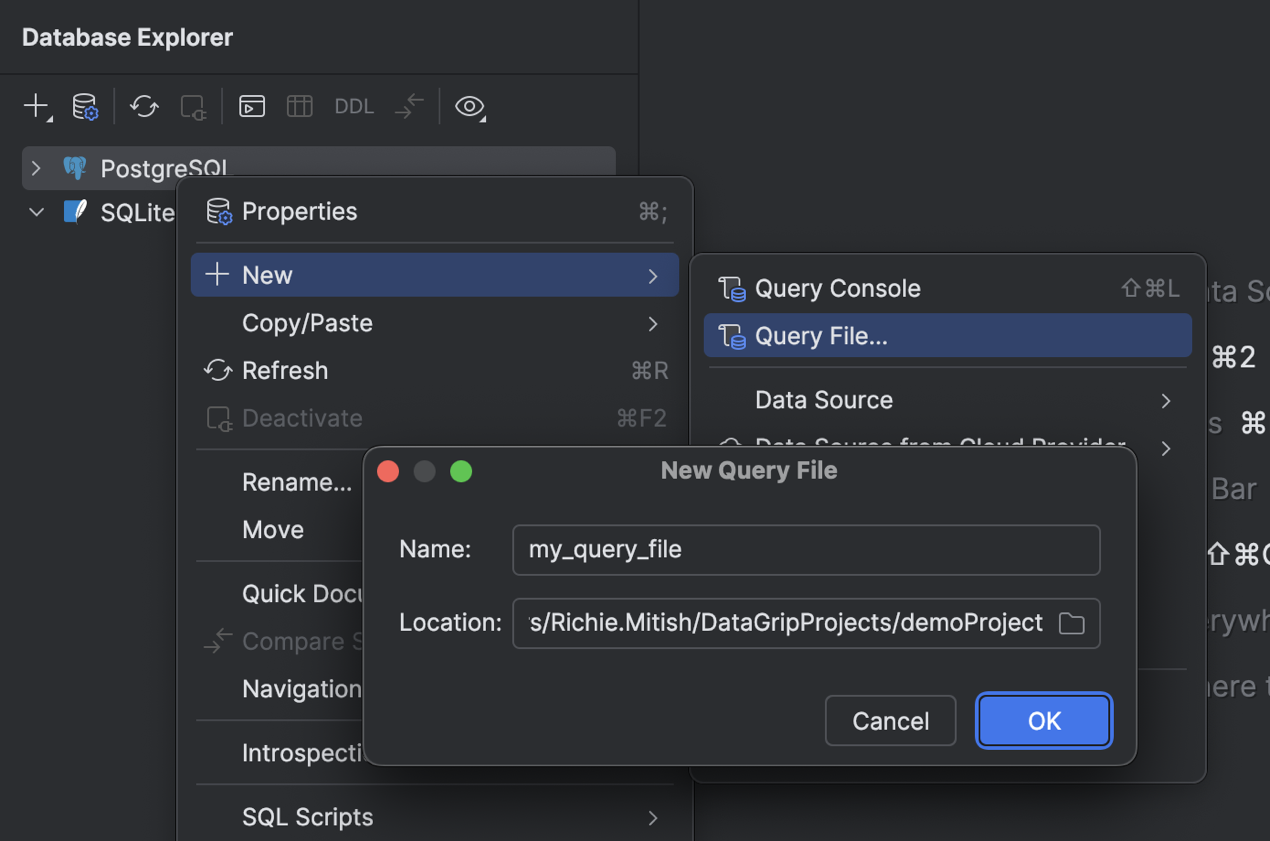
Next, all query files attached to a data source are displayed under the Query Files folder in the database explorer. This simplifies navigation and helps you focus on a data source’s context.
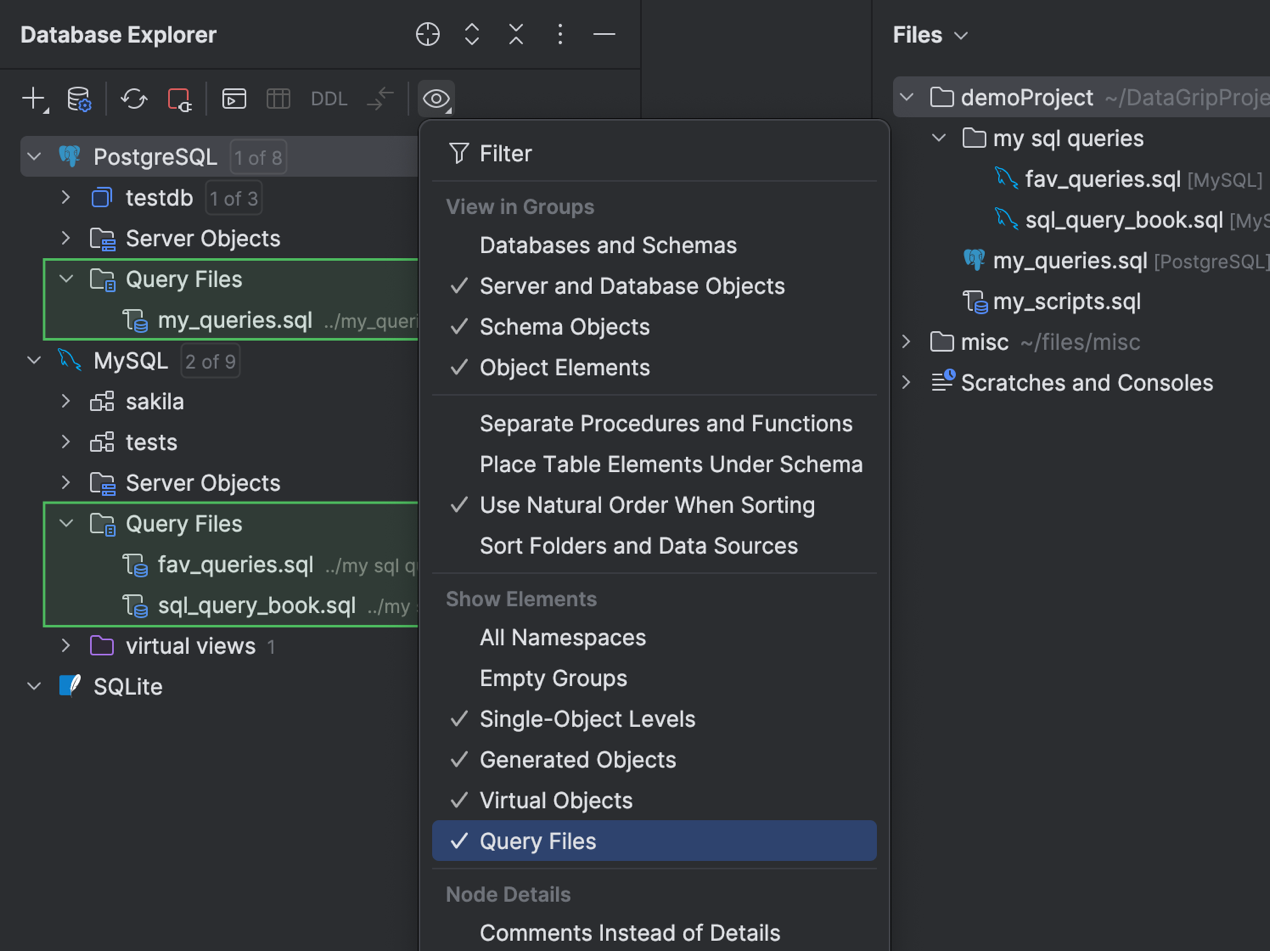
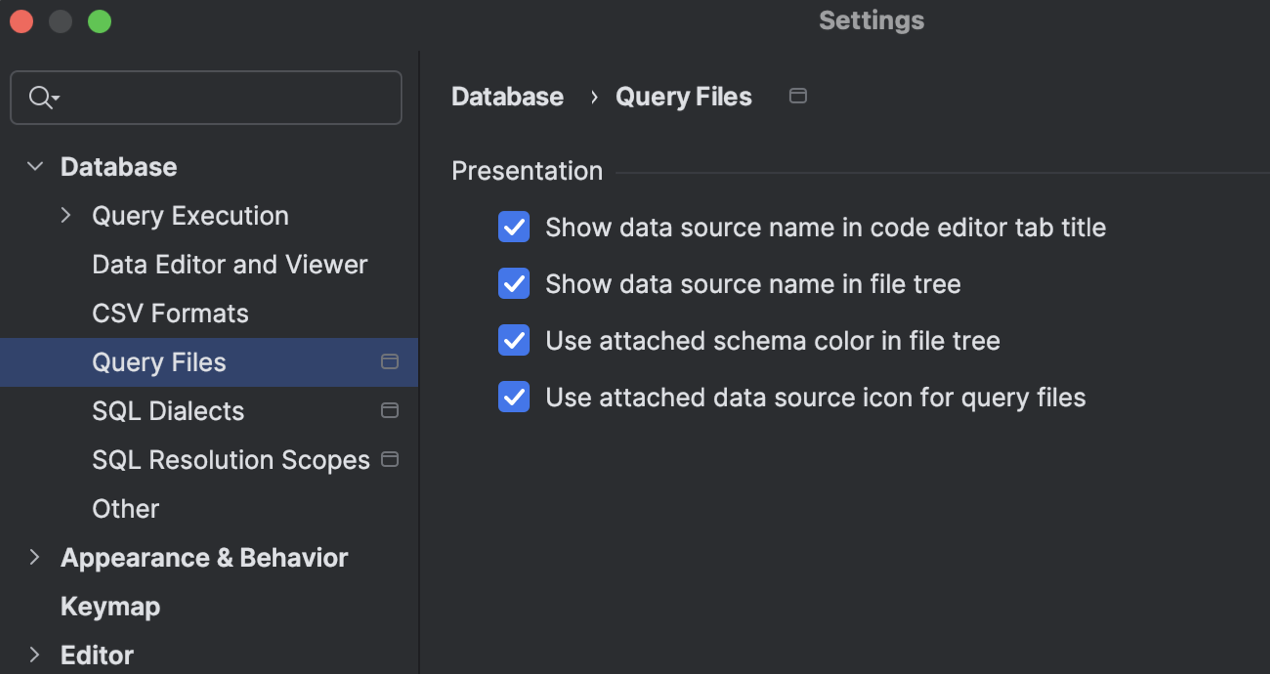
Speaking of focusing and making the UI more informative, we have implemented several display settings located in the IDE Settings dialog under Database | Query Execution | Query Files. You can use these settings to make sure you have query file details shown right where you need them.
AI
You can create a file from a code snippet suggested by AI Assistant when chatting with it in the AI Chat tool window. Previously, the created file wouldn’t have a data source attached or a SQL dialect defined. Now, if you provide any context about the database you’re working with, DataGrip will attach the data source you mention and set the SQL dialect for the new file automatically. Also, when you ask AI Assistant questions about a SQL file that already has a data source attached, the IDE will attach that same data source to the newly created file.
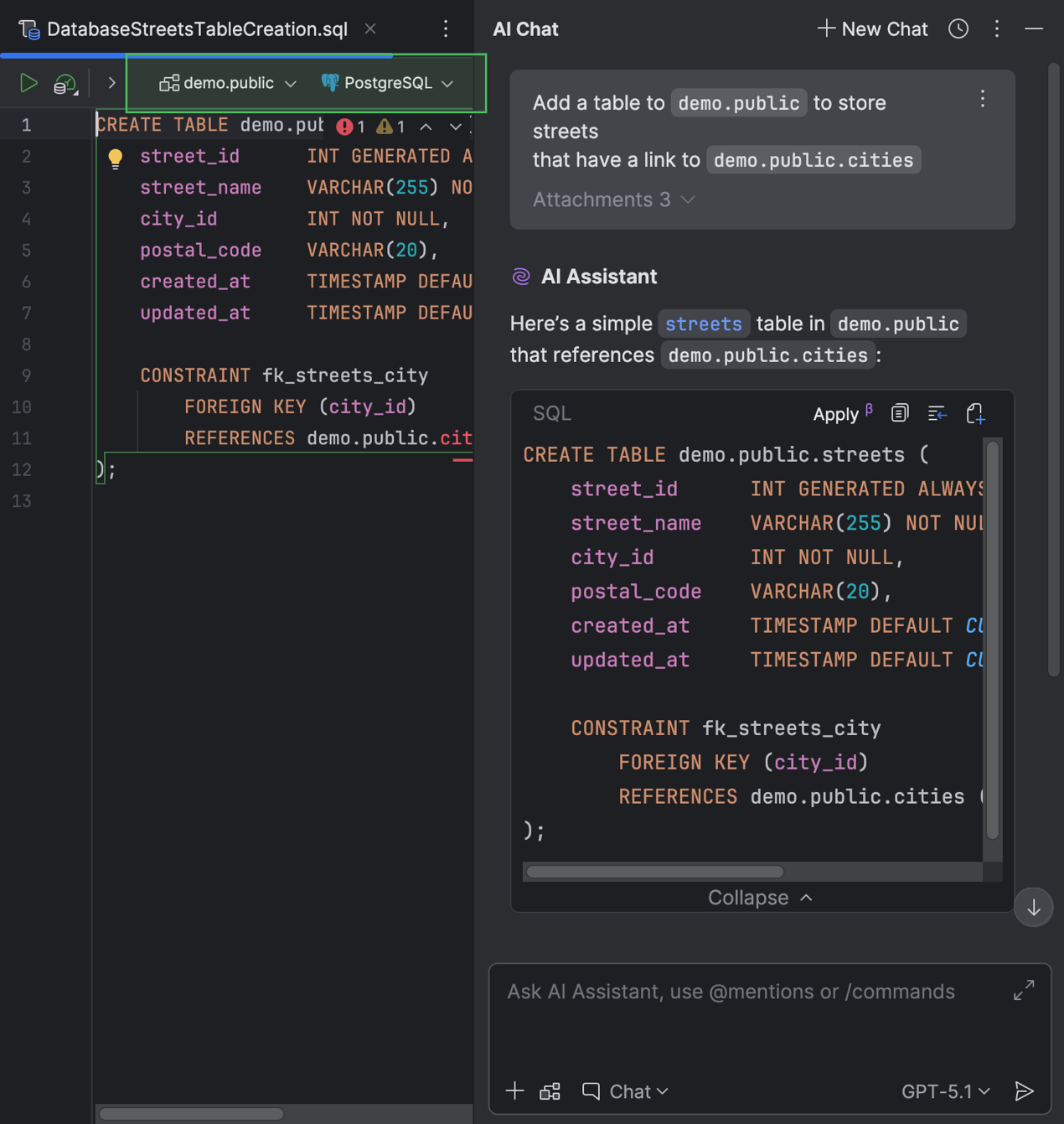
In addition, you can now work with AI agents in the AI Chat tool window. Currently, DataGrip supports Claude Agent and Codex. So, if your task requires assistance from a certain agent, you can work with it right in the IDE.
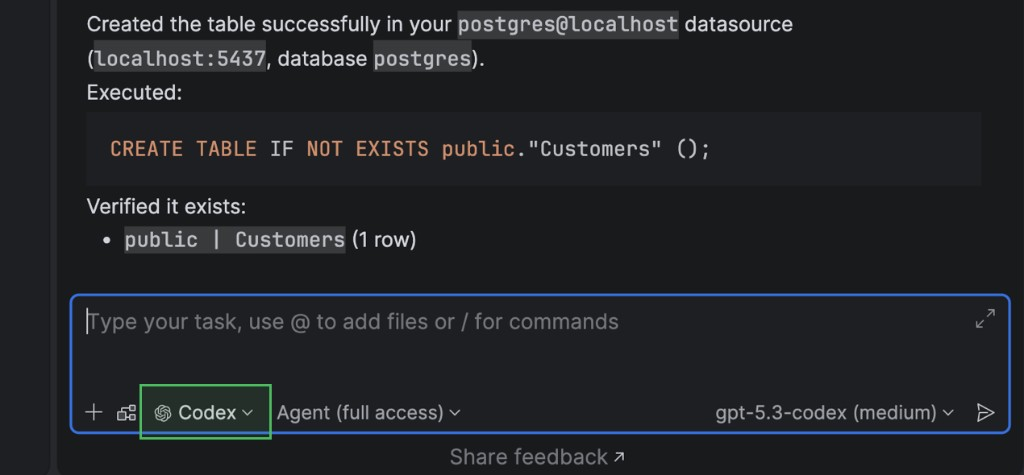
Additionally, database-specific capabilities have been implemented for the MCP server. With this enhancement, built-in AI agents and third-party tools can work with databases in a more structured way. For example, executing and cancelling running SQL queries is possible now, as is obtaining connection configurations and testing them. Also, to ensure security, four levels of user consent for data and schema access are required by default.
Connectivity
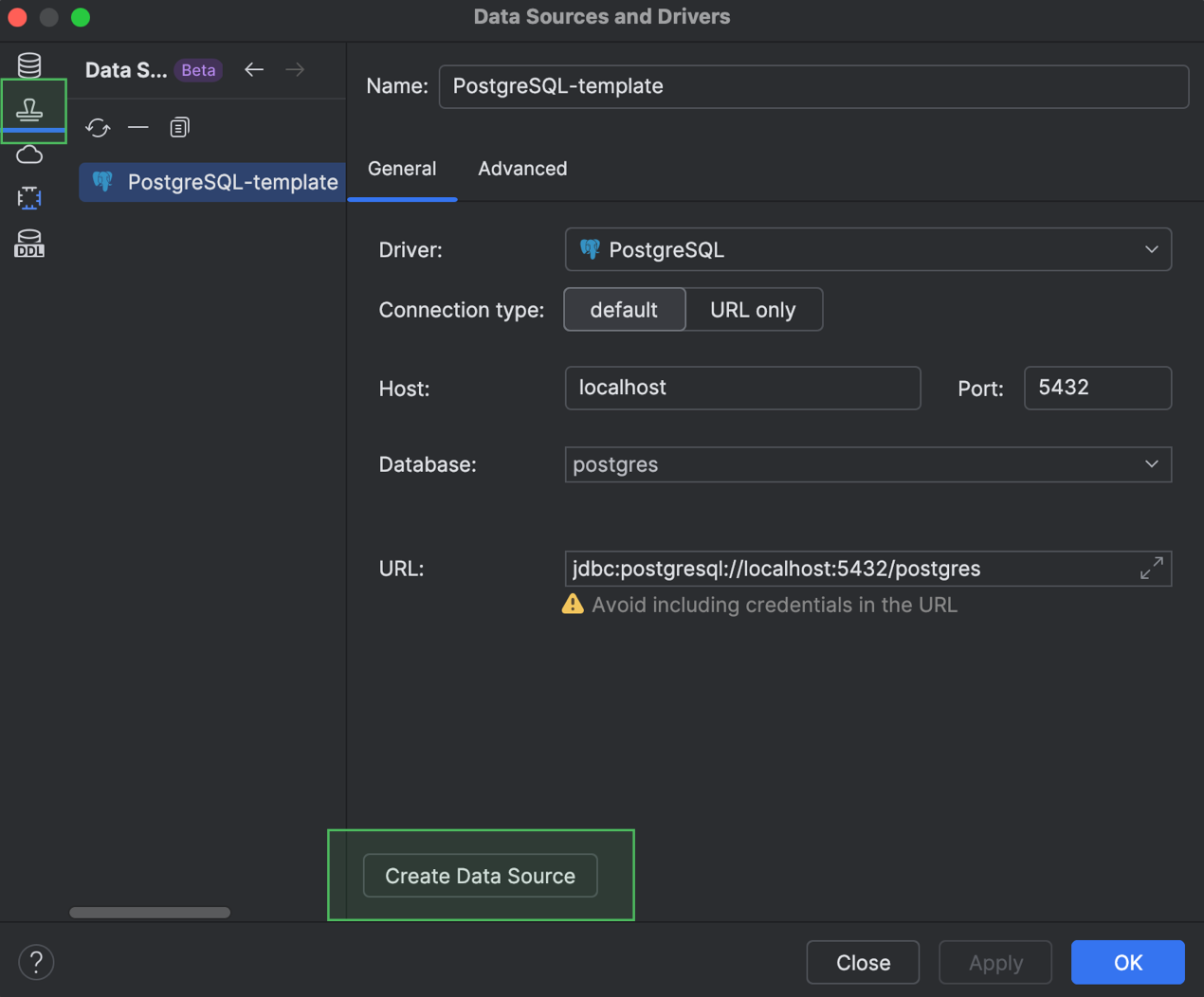
You can now reuse your data source settings by creating data source templates. The templates are stored in your JetBrains Account and include settings from the General and Advanced tabs of the Data Source and Drivers dialog, but exclude your database credentials. If you need to reuse some data source settings in another IDE in which you are signed in to your account, you can simply use a template. Just open the template list in the Data Source Templates tab of the Data Sources and Drivers dialog, select the one you need, and create a data source from it.
We’ve also added support for PostgreSQL 18, including OLD and NEW resolution in RETURNING clauses, WITHOUT OVERLAPS in primary and unique constraints, and other newly introduced keywords and commands.
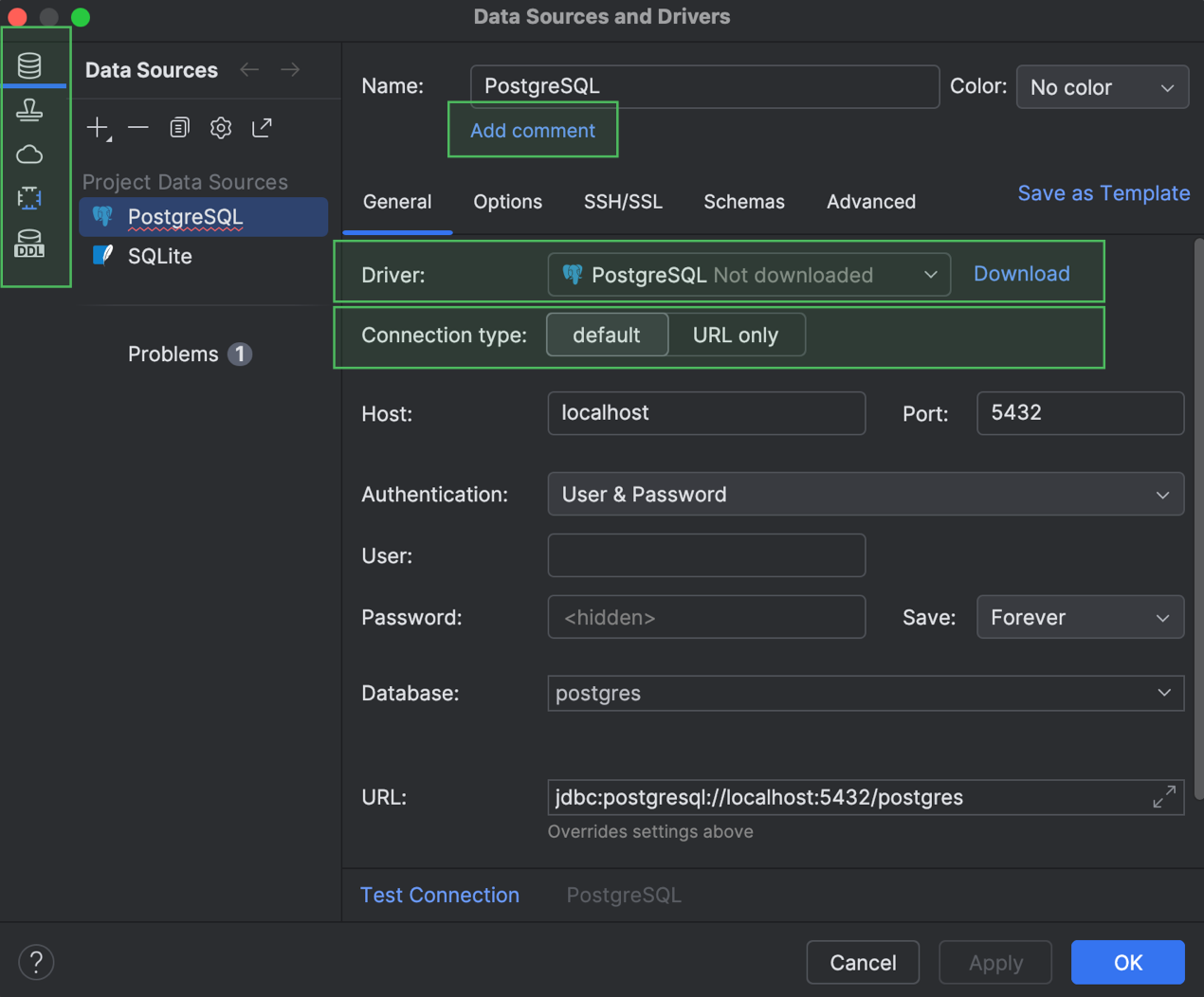
Finally, the General tab of the Data Sources and Drivers dialog has also received a few improvements. First, we’ve turned the Data Sources, Drivers, and other sections into the main tabs that you can see on the left-hand side. Next, the Comment field is hidden by default and only appears after you click Add Comment and add one. The Driver dropdown now informs you if a driver has not been downloaded, in which case a Download button appears next to the dropdown. Also, the Connection type options are displayed as tabs if fewer than three options are available. And finally, we have removed the Create DDL Mapping button from this tab.
Explain Plan UI and UX improvements
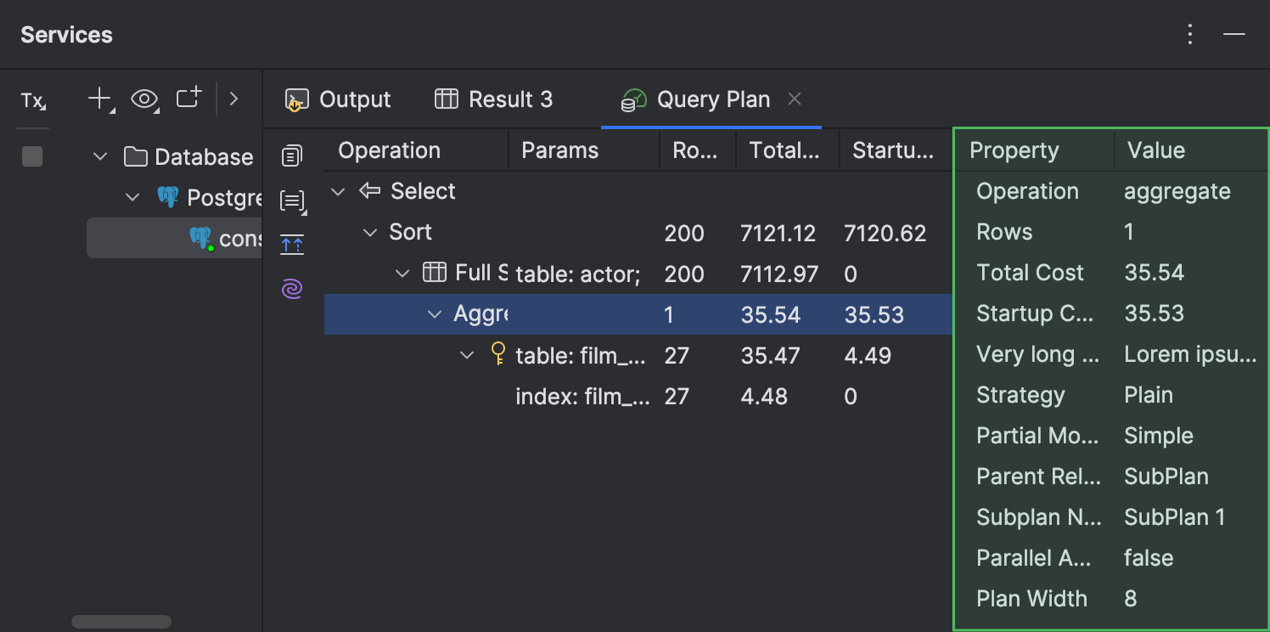
Now you have a more informative tab for working with query execution plans in the Services tool window. The tab is now called Query Plan and contains sub-tabs for the Total Cost and Startup Cost flame graphs.
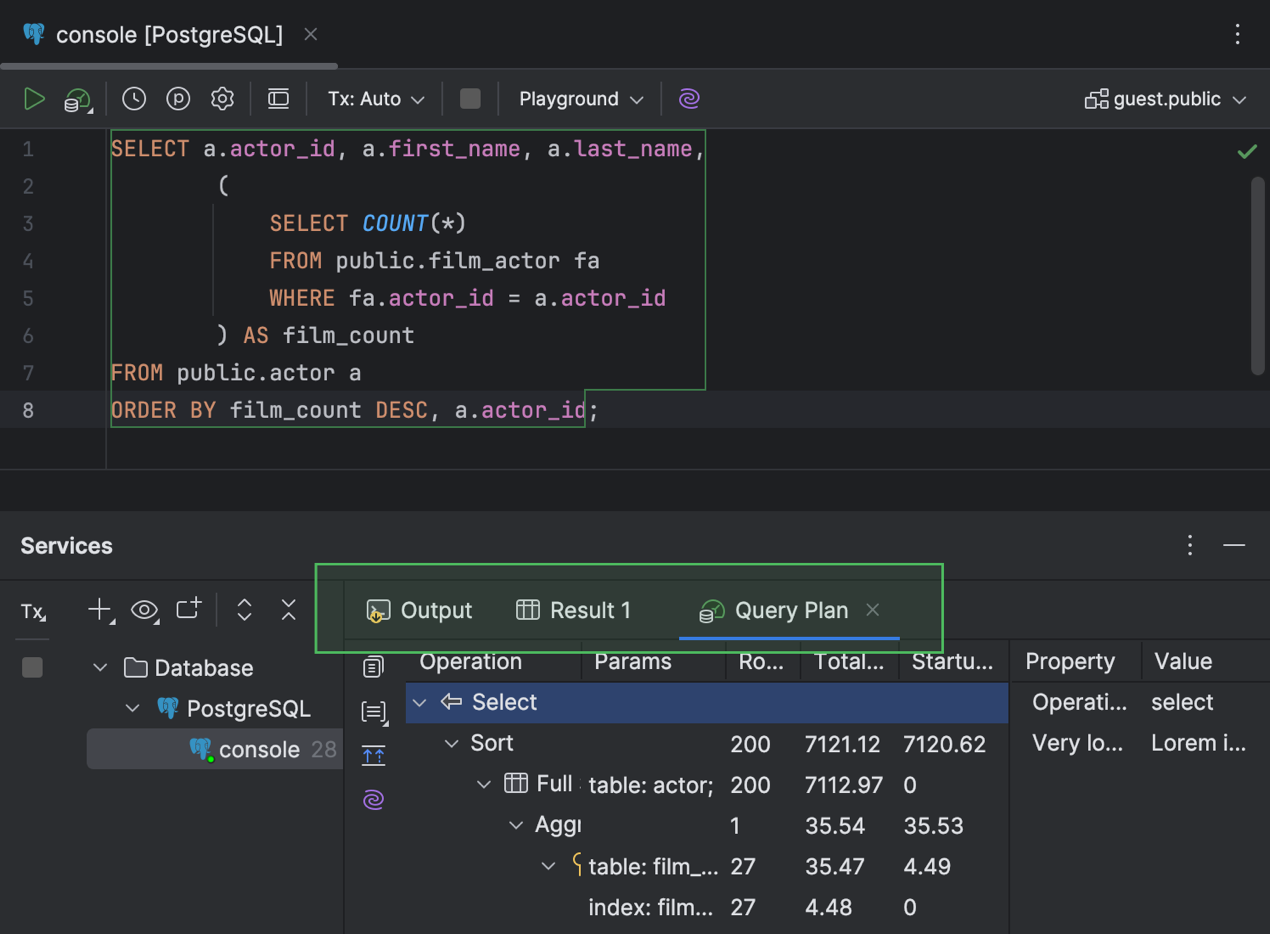
In the Operations Tree tab with the plan, you can find detailed information for each row in a separate panel on the right-hand side of the tab. If there’s a table name in one of the cells, quick documentation for the table is available in a popup.
Code editor
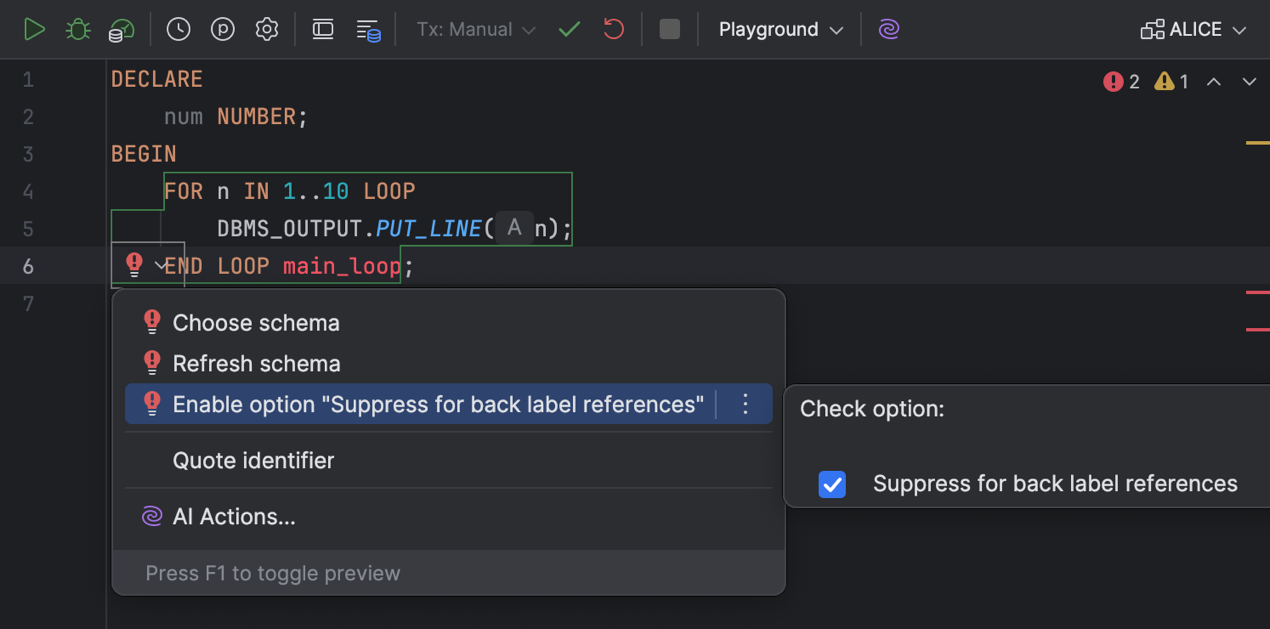
It is now easier to suppress the resolve inspection for back label references, as we have added it to the list of intention actions. You can now toggle this option under the Enable option “Suppress for back label references” intention action.
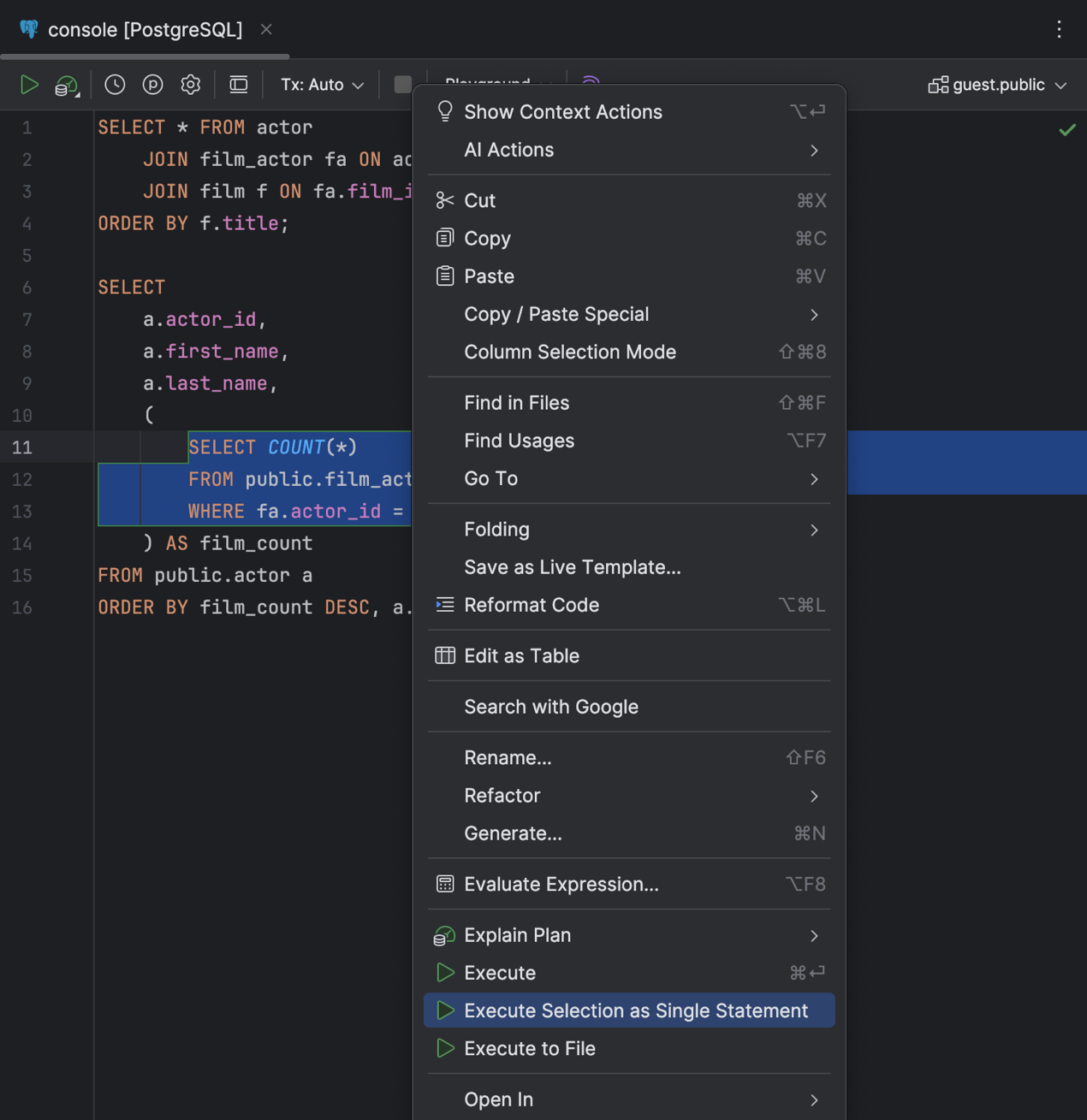
Executing a chunk of code is easier now, too – even when DataGrip isn’t parsing it properly. Just select the chunk, right-click it, and select Execute Selection as Single Statement.
The code editor has also been improved with new caret movement animation modes: Snappy and Gliding. We hope these modes improve your typing experience and make it more enjoyable. Our team developed the first mode, Snappy, to account for how different animations might feel to different people.
The other new mode, Gliding, is similar to the ones you see in other popular text editors.
Working with data
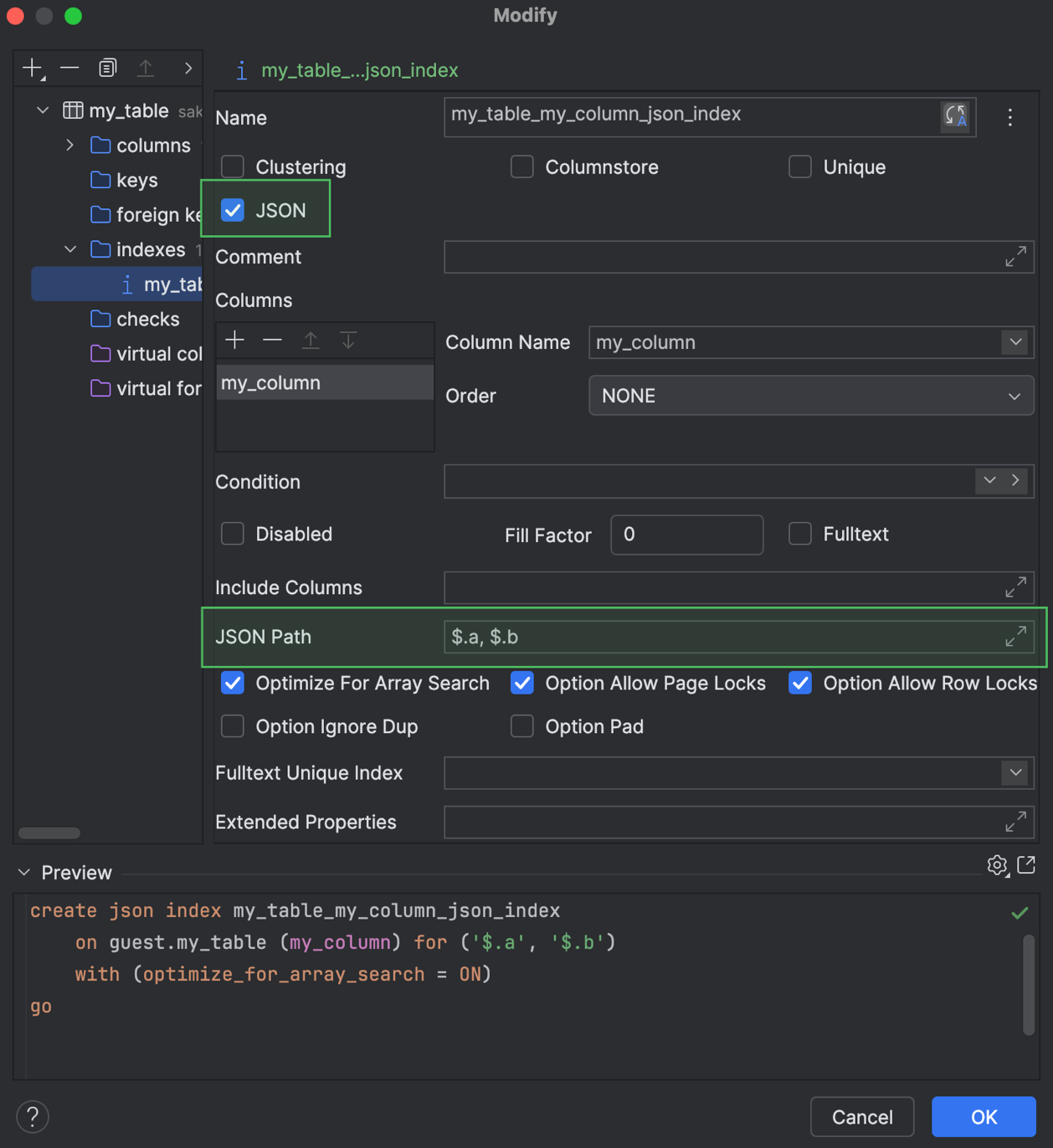
For Microsoft SQL Server, we’ve introduced support for JSON indexes. You can work with them in code generation and also use these indexes in the Create and Modify dialogs.
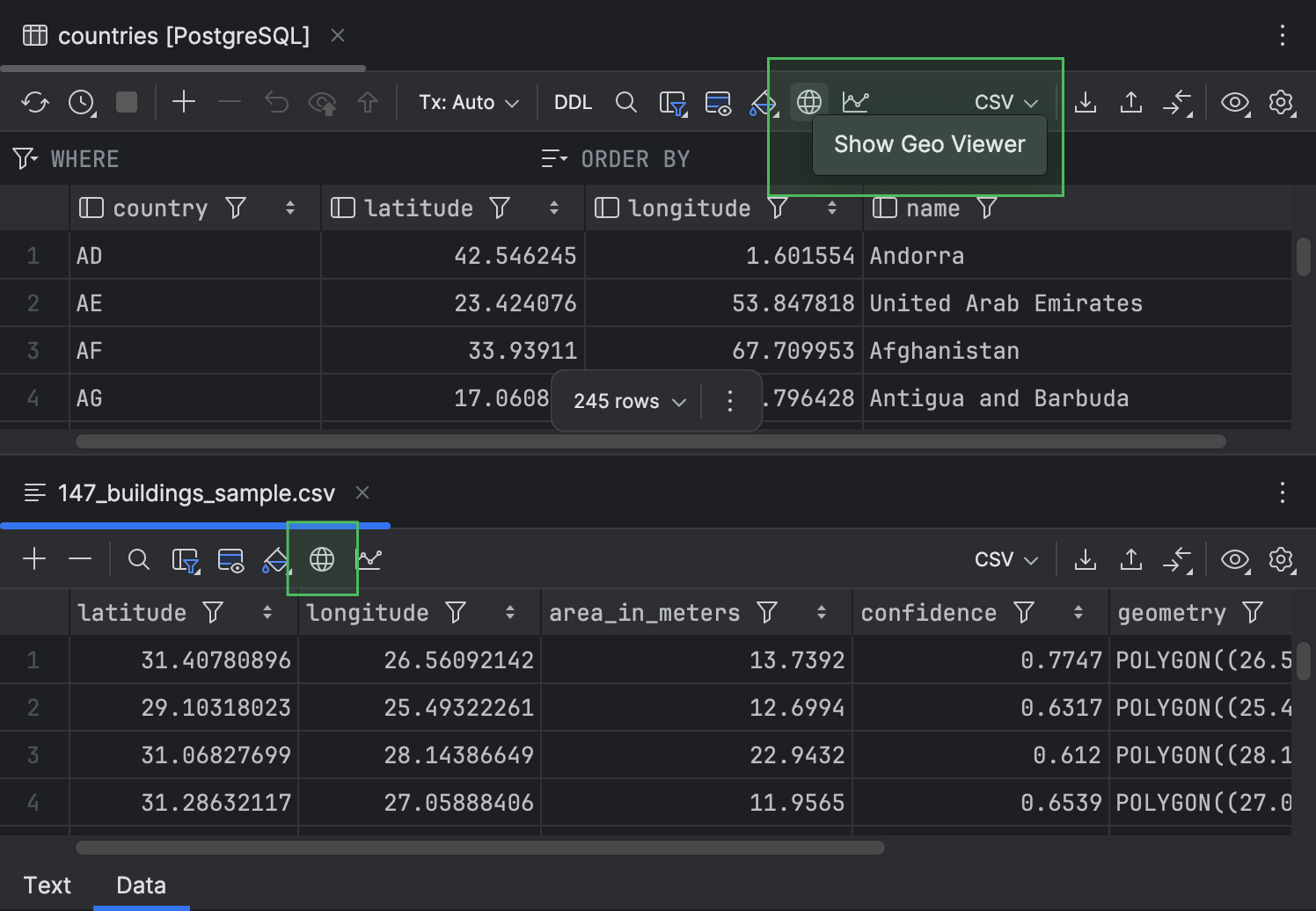
Additionally, we have moved the Show Geo Viewer button to the toolbar to make it easier to find.
Working with files
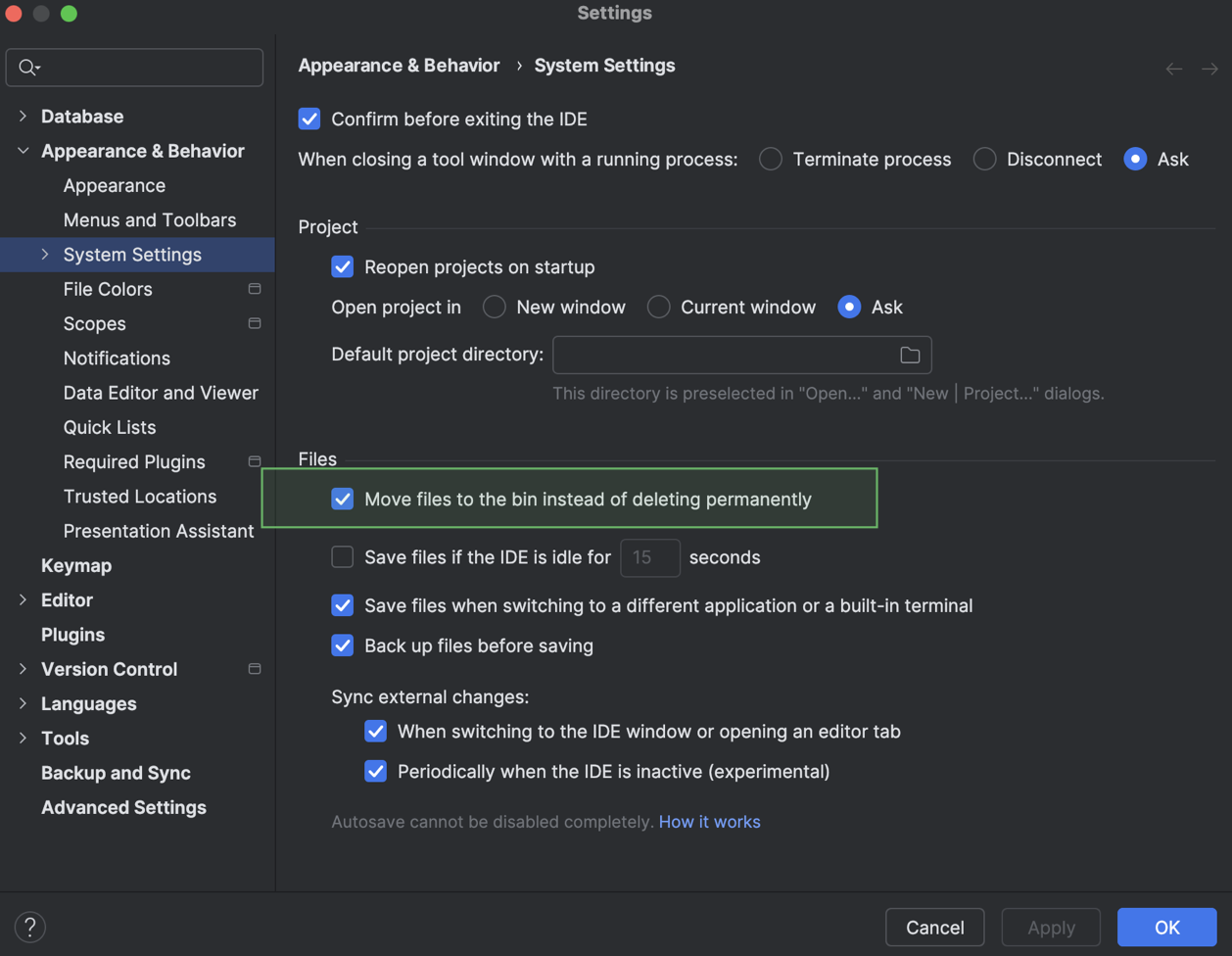
Now, you can choose how Delete actions behave. The IDE can either move a file to the bin or delete it permanently. To define this behavior, go to the IDE Settings dialog, navigate to Appearance & Behavior | System Settings, and toggle the Move files to the bin instead of deleting permanently setting. The setting is enabled by default.
If you’re interested in upgrading to DataGrip 2026.1, or if you have any questions or suggestions, here are a few links you might find useful:
- Download DataGrip 2026.1.
- Visit our What’s New page for the full list of improvements.
- Contact us on X.
- Report any bugs to our issue tracker
The DataGrip team