Qodana
The code quality platform for teams
The Real Winner of Cursor’s $60B Acquisition Won’t Be AI Coding Assistants

When news broke that SpaceX would acquire Cursor’s parent company, Anysphere, in a reported $60 billion all-stock deal, most of the discussion centered around AI.
This was another milestone and enormous valuation, and signal that AI is still bringing enormous disruption. Those reactions aren’t wrong but they can overshadow the bigger story.
The real significance of Cursor’s acquisition isn’t that AI can now write code. We already knew that. The bigger story is that as AI dramatically increases the volume of code being produced, code quality is becoming the new bottleneck.
In other words, the future of software engineering won’t be defined by who can generate the most code but rather by who can trust it.
The AI coding race has entered a new phase
The acquisition itself is remarkable. SpaceX’s acquisition is widely viewed as an attempt to strengthen its AI capabilities by combining Cursor’s coding expertise with xAI’s models and massive compute infrastructure.
Whether you’re using Cursor, JetBrains AI, GitHub Copilot, Claude Code, Gemini CLI, Codex, or another AI assistant, volume is the remarkable thing – the trend we can’t ignore, even considering cost.
Generating a function, scaffolding an API, writing tests, explaining unfamiliar code, or refactoring thousands of lines happens fast. And, even though many developers dispute AI’s efficacy, there are objective productivity gains. But now that progress is solving one problem, another one is coming to the fore.
Every line of AI-generated code still needs to be checked
AI changes how code is written but it doesn’t change what clean code is. Subjective to some extent or not, every pull request still needs answers to the same questions:
- Is the code correct?
- Does it introduce security vulnerabilities?
- Is it maintainable?
- Does it follow team conventions?
- Does it increase technical debt?
- Will it scale?
- Will another engineer understand it six months from now?
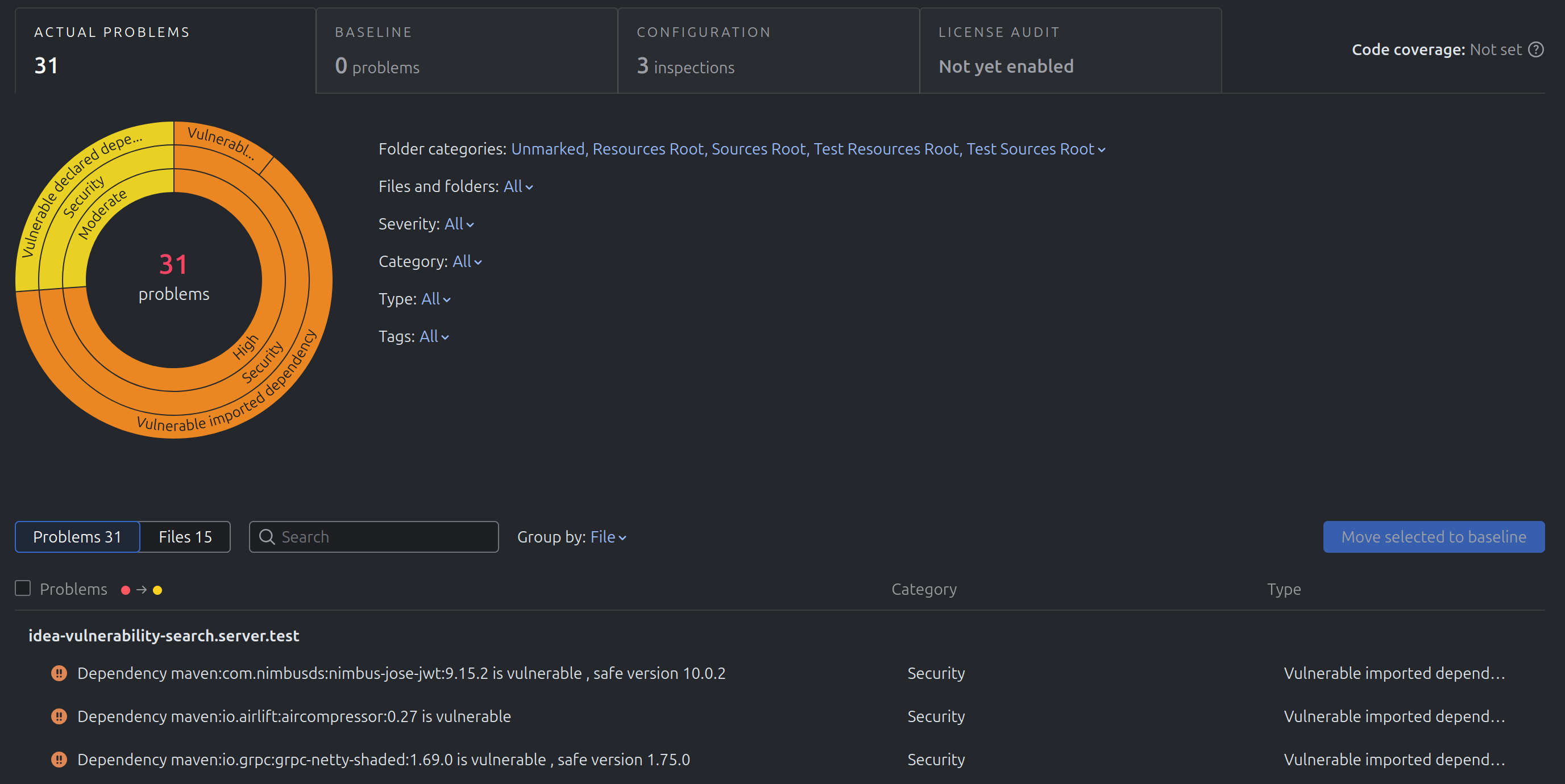
If developers produce two or three times as much code with AI assistance, reviewers aren’t suddenly going to have two or three times more time. You could argue that AI will automate code review too. And it will, up to a point, but AI review is probabilistic, while production quality gates need to be deterministic, repeatable, and enforceable. Teams still need automated checks they can trust every time. Review bandwidth becomes the limiting factor.
More code means more verification
Software engineering has always operated under a simple principle: The cheaper it is to produce something, the more important quality control becomes. Manufacturing learned this decades ago. Publishing learned it with desktop publishing. Photography learned it with digital cameras. Software is learning it now.
Now that code generation is becoming inexpensive (depending on token usage), verification becomes a more scarce resource. This changes where engineering organizations invest.
Instead of optimizing only for code generation, teams increasingly need tools that helps them answer:
- Which findings actually matter?
- Which issues are new?
- Which vulnerabilities should block deployment and be quality gated?
- Which warnings are simply noise?
Research backs up these claims
Interestingly, academic research is beginning to observe this tradeoff. One large empirical study examining Cursor adoption across GitHub projects found that while AI assistance increased development velocity initially, projects also experienced a persistent increase in static analysis warnings and code complexity. Over time, those quality issues became a contributing factor to slower development.
Another recent study surprised many researchers by finding that experienced open-source developers using frontier AI tools, including Cursor Pro, didn’t consistently complete tasks faster under the study’s conditions. The authors argue that the relationship between AI and productivity is more nuanced than many expect, particularly in mature codebases with high quality standards.
Neither paper argues against AI coding assistants. Instead, they highlight that generating code is only one part of software engineering. Maintaining quality remains equally important.
AI doesn’t replace code review, it changes it
Traditional code review focused heavily on implementation. Did the developer make a mistake? Did they overlook an edge case? Did they forget to handle an exception?
As AI writes more of the implementation, reviewers increasingly shift toward higher-level questions:
- Is this the right solution?
- Is the architecture sound?
- Does it align with our standards?
- Is the generated code introducing unnecessary complexity?
That makes automated quality analysis even more valuable. Static analysis can continuously inspect thousands of files while human reviewers focus on design and business logic. That’s objectively a much better division of labor.
The rise of the “quality layer”
This is why I believe the next generation of developer tooling won’t consist of isolated AI assistants. It will consist of layered workflows.
An AI assistant generates code, then static analysis validates it. Security scanners identify vulnerabilities. CI/CD enforces quality gates. Developers review only what genuinely needs human judgment.
The organizations that succeed won’t necessarily generate code faster but rather generate trusted code with less effort.
Qodana is part of this story
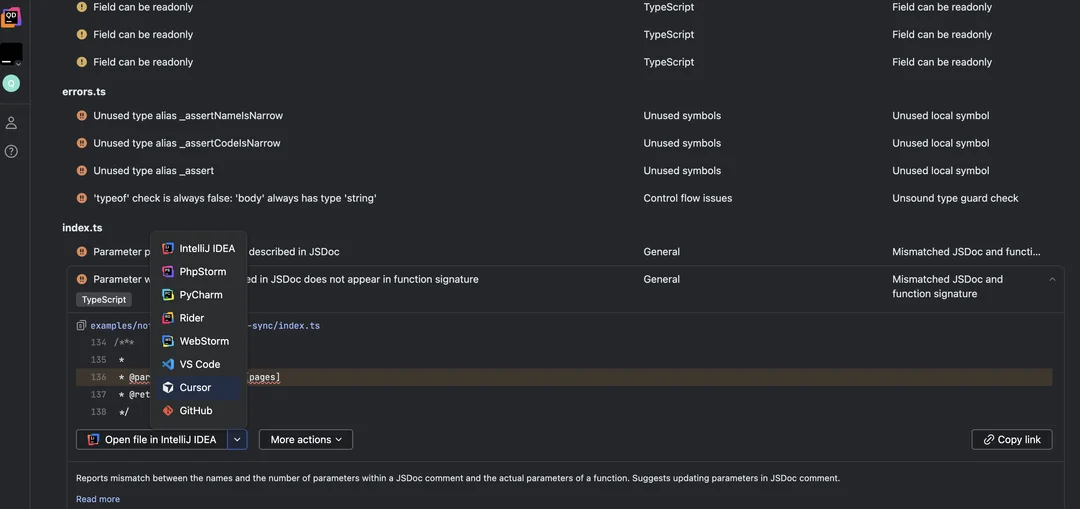
This is where Qodana becomes more relevant. Our team doesn’t want to replace coding agents but rather to work with them.
As AI accelerates code generation, Qodana helps teams automatically inspect that code for quality issues, maintainability concerns, security problems, and compliance with engineering standards before changes reach production.
We’re working to make sure that you and your team can produce code that’s fit for production without asking you to discard AI.