Qodana
The code quality platform for teams
PHP Version Migration That Doesn’t Break Everything



PHP powers 71.8% of all websites with a known server-side language. It is a living language that underpins a significant portion of the modern web and one that keeps getting better. For example, EKSNEKS notes that migrating from PHP 7 to PHP 8 alone can deliver 18–42% performance gains depending on workload. However, only 57% of PHP websites use version 8, while 34% still run on PHP 7 – a version that is no longer supported.
PHP version migration is an ongoing reality for any team that actively uses PHP in its tech stack. Versions come and go, features become obsolete and are removed, and continuing to use an end-of-life version means knowingly accepting security risks. The larger the codebase, the longer the migration is postponed, and the more expensive each subsequent upgrade becomes.
In practice, migration rarely stalls because of a single major issue. It slows down due to several systemic challenges that accumulate over time.
| Deprecated and removed functions Every new PHP release removes or changes functions, methods, and language behaviors. What worked in 8.0 might break silently in 8.2. Without systematic scanning, such issues are often only discovered in staging or production. | Hidden incompatibilities in large codebases In real production code, there can be hundreds of incompatibilities scattered throughout the project, often in rarely executed paths. Manual code reviews don’t provide reliable coverage. | Competition with feature development Migration isn’t as exciting as developing a new feature. That’s exactly why it keeps getting put on the back burner. But the cost of delay is very real: According to a vFunction study, technical debt already accounts for more than a quarter of the total IT budget at over 50% of companies. |
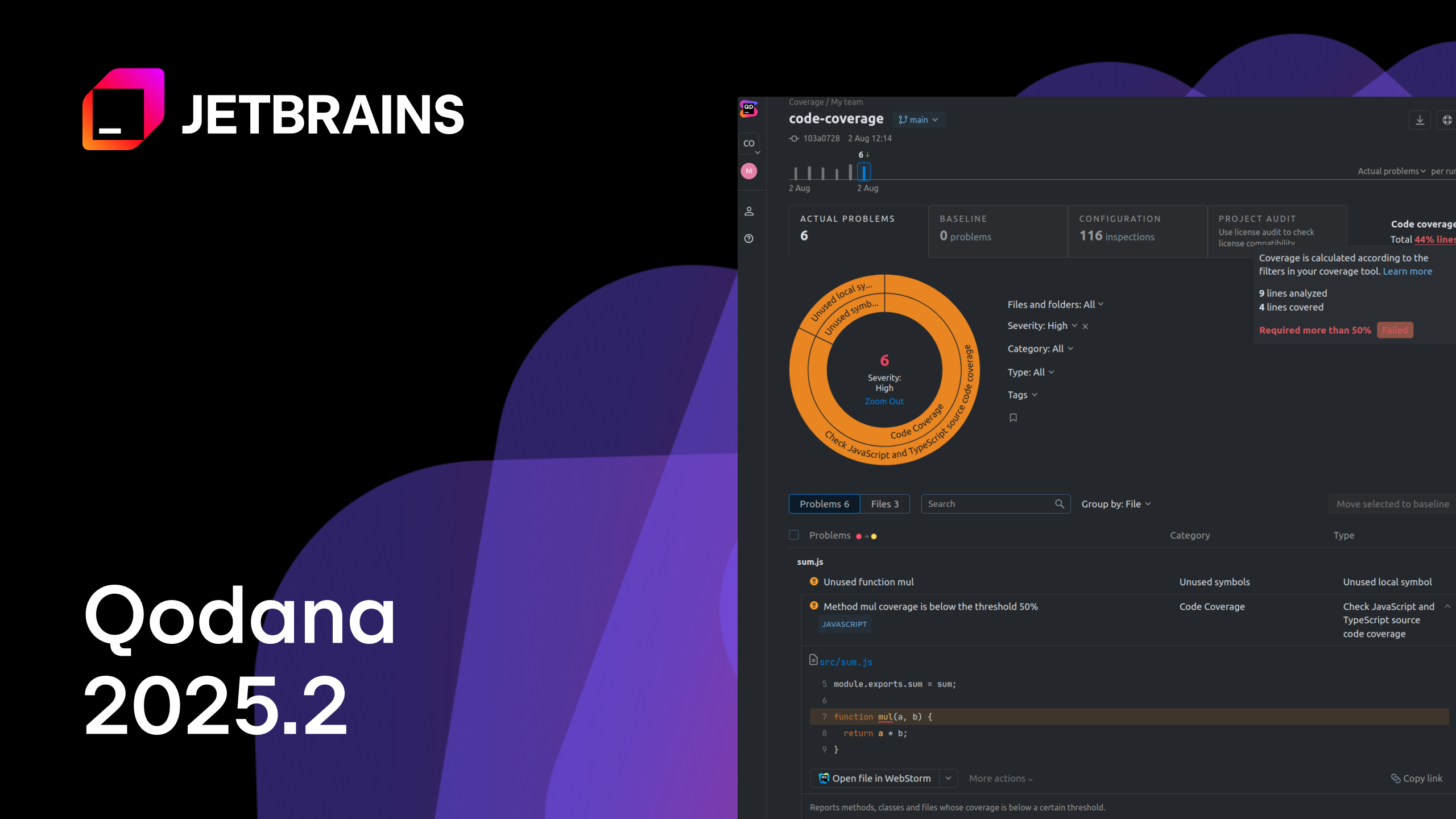
All of these issues have one problem in common: a lack of visibility. Teams don’t know exactly what will break – or where – until they try to start migrating. Qodana solves this problem. JetBrains’ smart static analyzer, with a built-in PHP-migration script, provides a complete picture of incompatibilities before work begins, making it easy to understand which functions are deprecated, where they are used, and how critical each identified issue is.
How Qodana fits into the PHP version migration workflow
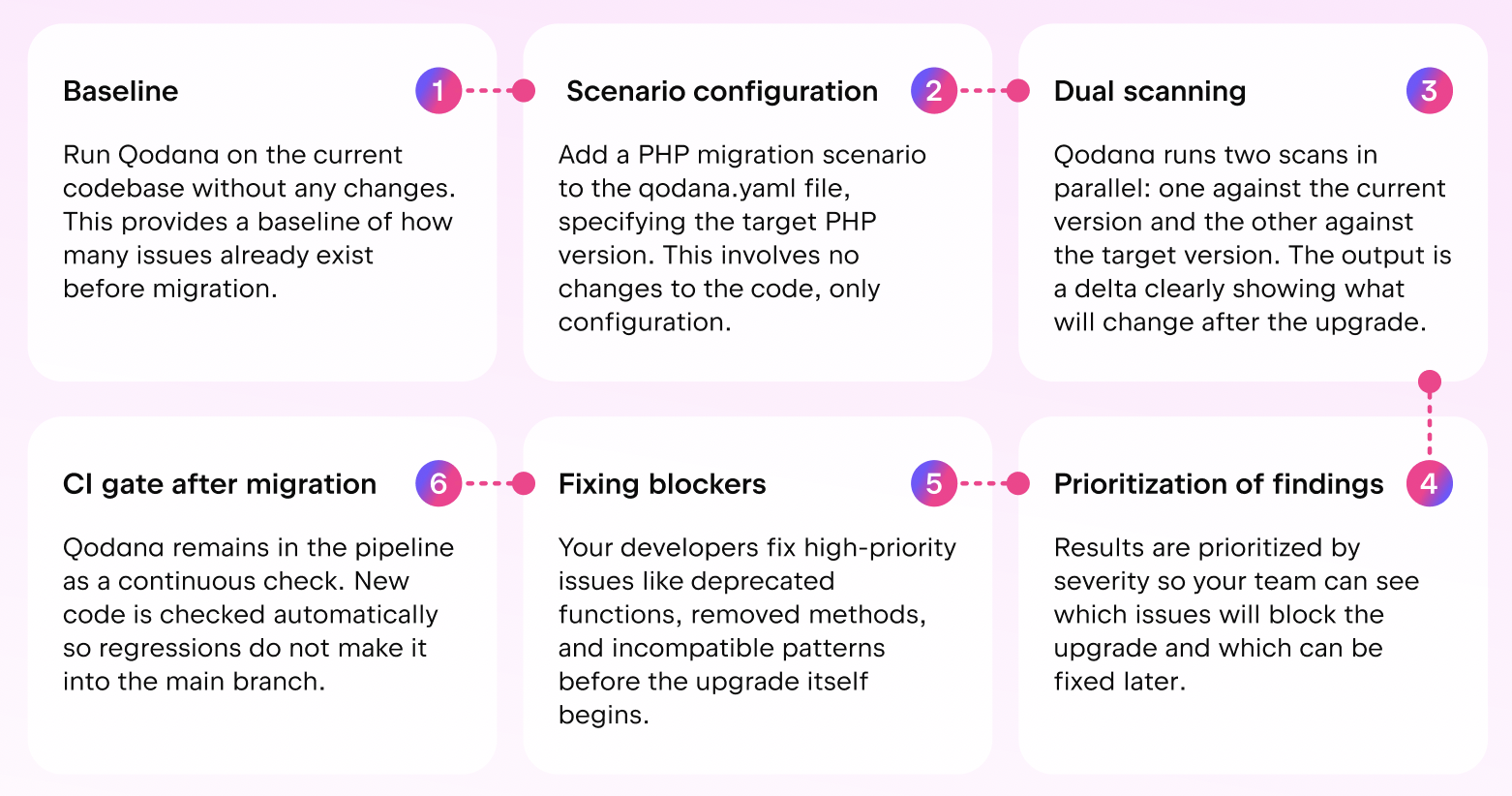
What changes when Qodana becomes part of the PHP version migration process?
| Without Qodana | With Qodana | |
| When did you find problems? | In staging or in production | Before the migration begins in the CI pipeline |
| How did you estimate the scope of work? | Manually and approximately | Automatically, with a detailed list that includes severity levels |
| What happens after migration? | Setbacks are possible | CI gate helps prevent new issues |
As a result, your team gains not just a tool, but control over the process, allowing you to:
- Know the scope of your work before starting.
- Fix blockers before deployment, not after.
- Avoid relying on manual audits.
- Protect yourselves from regressions in CI.
PhpStorm helps developers fix migration issues, Qodana helps teams manage migration risk
If you’re reading this, you may well be a PhpStorm user, in which case you have the advantage when it comes to version migration with Qodana.
• Use Qodana to analyze the codebase and generate a migration report for new PHP versions.
• Prioritize findings based on severity and affected components.
• Open findings in PhpStorm and use inspections and quick-fixes to remediate issues.
• Re-run Qodana in CI to verify migration readiness and enforce quality gates before release
Try Qodana and find out what could go wrong (and how to prevent some of it) during a PHP version migration – before you start, or request a demo.