Scala Plugin
Scala Plugin for IntelliJ IDEA and Android Studio
IntelliJ Scala Plugin in 2025

In December 2024, we published a year-in-review summary of our work on the Scala Plugin. By that time the following year, we were busy releasing IntelliJ IDEA and the Scala Plugin 2025.3, as well as preparing for the upcoming Scala 3.8 release. This was followed by a long holiday break.
But as they say, not all who wander are lost. Now, without further ado, let’s take a look back at the main Scala Plugin highlights of 2025.
Main changes to the Scala Plugin
Scala 3 support
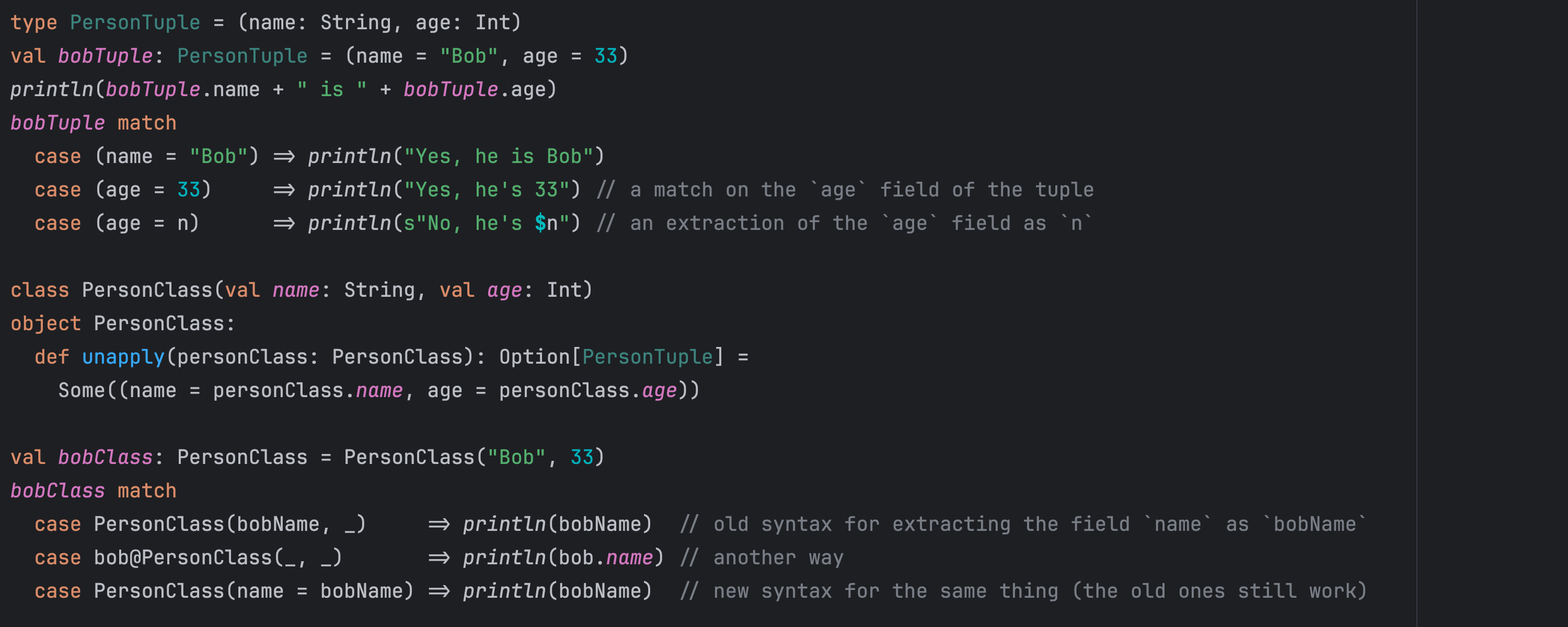
Supporting Scala 3 sometimes feels like chasing a rabbit: While we’re working on delivering support for existing features, the compiler team is building new ones. But we’re closing the gap. Here are some of the features we added support for in 2025:
- Named tuples
- “Better fors” and refutable patterns in for-comprehensions
- Opaque types
- Context bounds and givens
- The new into modifier
The last point (support for into) is part of a larger project to ensure support for Scala 3.8 by the time it is released. Additionally, we introduced several improvements to code resolution and type inference, and addressed some “good code is red” issues in Compiler-based highlighting, making both Built-in and Compiler-based highlighting modes more reliable.
sbt
The new sbt modules layout is now enabled by default. We made several improvements to the new separate production/test modules and resolved many edge cases discovered since the feature was first released in 2024.3. We also directed a portion of our efforts toward supporting sbt 2.0, as its release is right around the corner.
X-Ray mode
X-Ray mode enhancements include displaying apply calls, name hints (including for all parameters, not just literals), and clearer indicators of when the apply method is being used instead of a regular constructor. We’ve also improved type hints and info for variable patterns, generators, literal parameters, underscore parameters, and kind projector syntax.
Performance improvements
Performance improvements include faster editor actions and fixes for occasional UI freezes during actions like Show Type Info and Show Implicit Argument. You can disable built-in inspections in Settings for better performance in cases where compiler highlighting will suffice. Tips and contact instructions are also available under Settings. But we’ve got plenty more where that came from and will be announcing further improvements in 2026 – stay tuned!
You can read about all these changes and many more in detail in our release notes:
And in a blog post about our support for Scala 3.8.
State of Developer Ecosystem Survey 2025
In what has now become an annual tradition, JetBrains conducted a survey of users of our products. Here are a few key Scala-related insights:
Scala 3 popularity
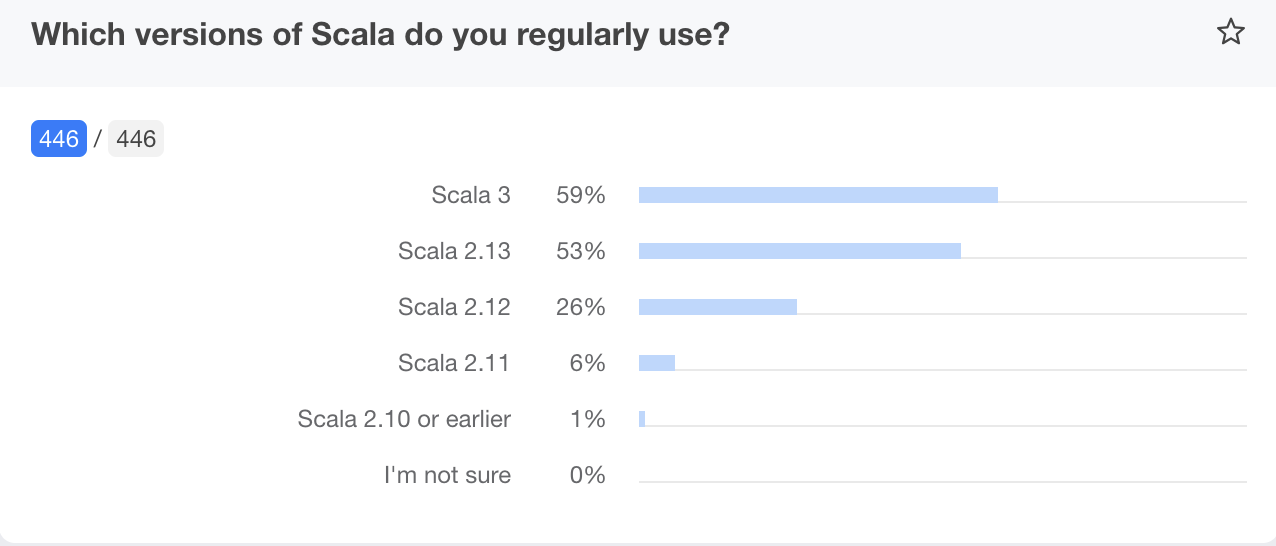
Among the 446 people who answered this question, 274 (59%) answered that they use Scala 3 regularly. “Regularly” is a keyword here. We also asked about your usage of different Scala versions at home and at work. Although versions 2.13 and 2.12 are still in use, the percentage of developers who have already switched to Scala 3 but still use Scala 2 at work adds another 15% to the result.
Unit testing frameworks
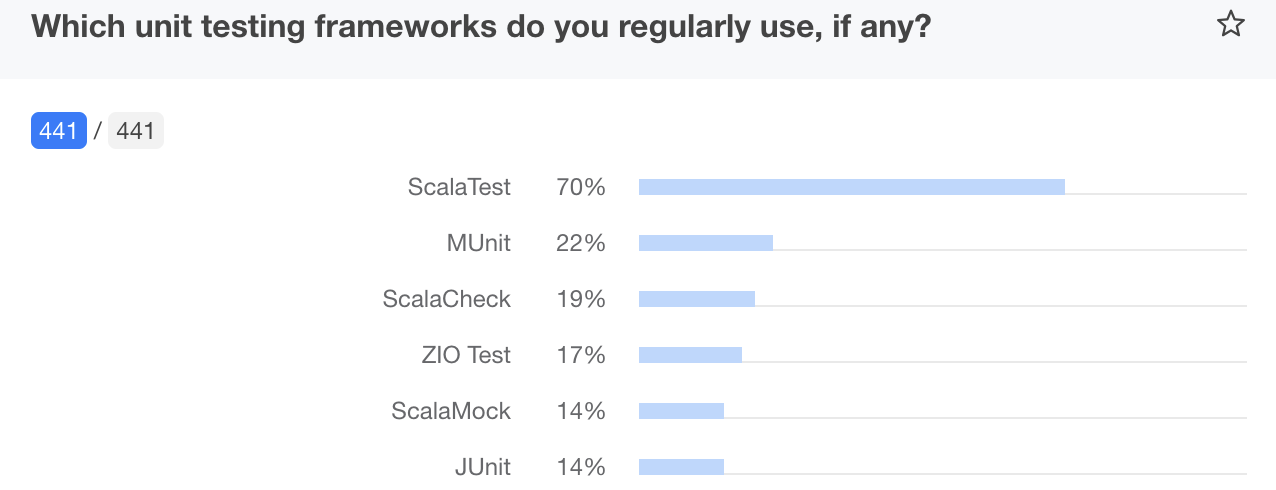
ScalaTest maintains its top position at 70% (down from 71% last year), but MUnit and ZIOTest are on the rise, coming in at 22% and 17%, respectively (as opposed to 19% and 8% last year).
Frameworks and libraries
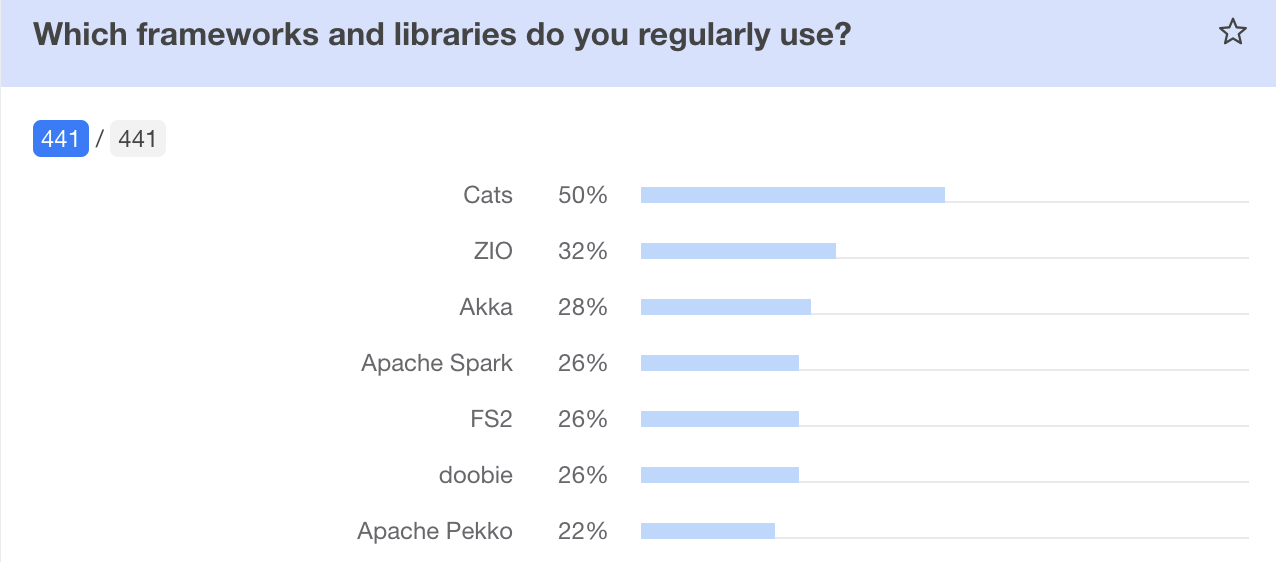
Cats, ZIO, and FS2 remain popular, with ZIO having the biggest increase in popularity among them, jumping from 27% in 2024 to 32% in 2025. Akka usage, on the other hand, is trending downward – it was at 35% two years ago, then fell to 30% last year, and is now at 28%. It’s clearly losing users to Pekko, which has risen from 15% to 22%.
Head over to this page to compare this year’s numbers with those of last year. And feel free to check out The State of Developer Ecosystem Report 2025.
YouTube videos about the Scala Plugin
In December 2024, we released the first video in a new YouTube series about how IntelliJ IDEA supports Scala. Each video is approximately 10 minutes long and discusses one main feature, along with a few smaller, closely related ones. In 2025, we released seven more of these videos, covering various topics from enum support to the debugger. For our mobile users, we also whipped up a few YouTube Shorts addressing the same topics. You can watch them all here.
Conferences
Last but not least, in 2025, we were Gold sponsors at two major Scala conferences: Scalar in March (Warsaw, Poland) and Scala Days in August (Lausanne, Switzerland). At Scalar, we gave a lightning talk on two closely connected Scala Plugin features: inlay hints and X-Ray mode. At Scala Days, we delivered two 40-minute talks. The first was a sort of two-for-one: It addressed how to stay productive with the Scala Plugin and gave a quick status update on Scala 3 and the contributions made to it thus far. The other talk was a walkthrough of AI tooling in IntelliJ IDEA.
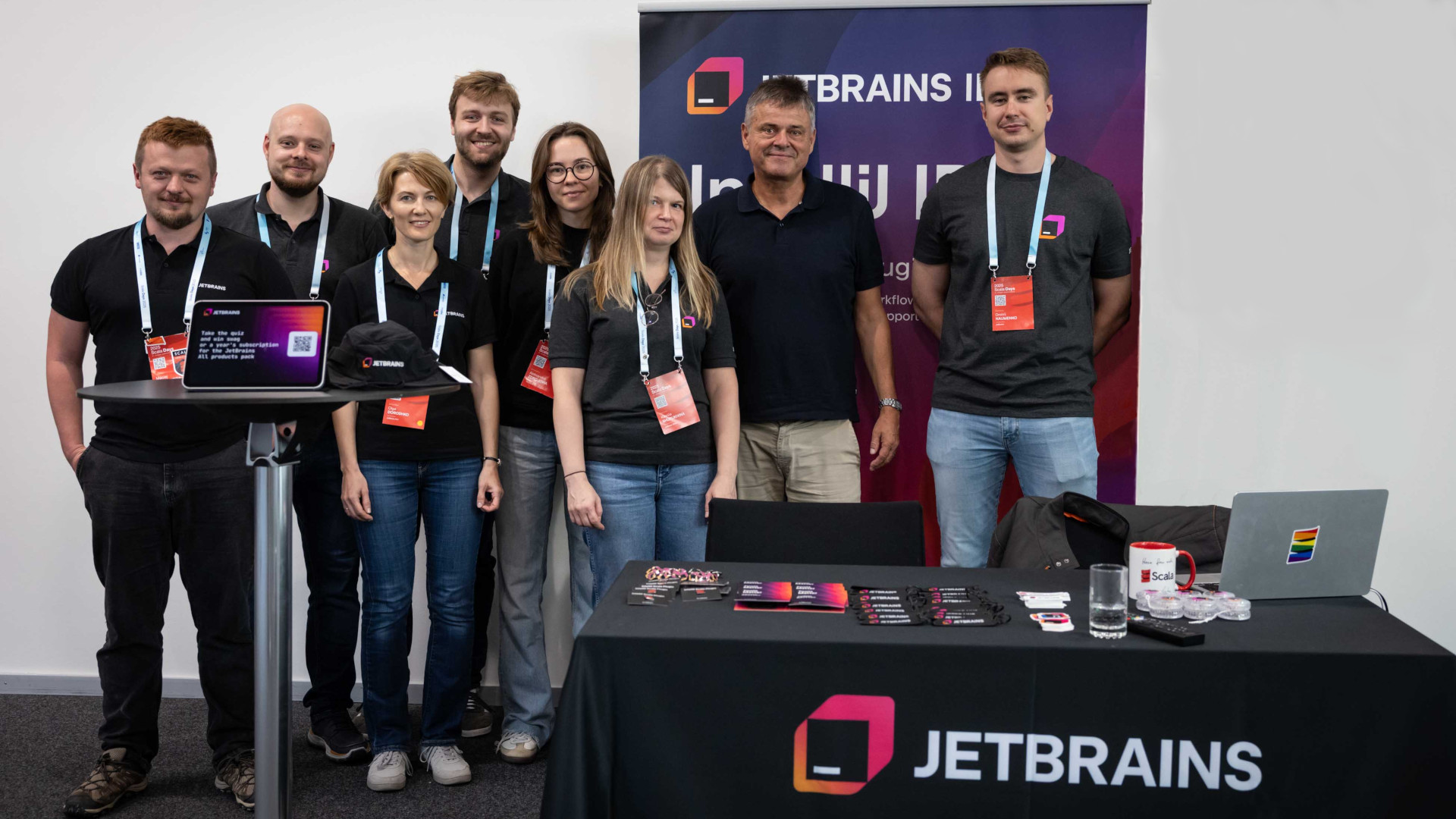
That’s all for now! We hope your 2026 is off to a productive start.
The Scala team at JetBrains