
RubyMine 2026.2: Agentic Debugging, Native GitHub Copilot Integration, Default Symbol-Based Code Insight, and More

RubyMine 2026.2 is out!
RubyMine 2026.2 introduces agentic debugging, native GitHub Copilot integration, AI completion with third-party providers, and symbol-based code insight enabled by default. You’ll also find improvements across the Ruby ecosystem and everyday IDE workflows.
You can download RubyMine 2026.2 from our website or update via the Toolbox App.
Let’s look at what’s new.
AI
Agentic debugging
Instead of manually stepping through your application, you can now ask an AI agent to investigate a problem using the RubyMine debugger.
Agentic debugging is powered by bundled skills – predefined workflows that give compatible AI agents access to IDE capabilities. RubyMine 2026.2 includes the new rubymine-debugger skill, allowing agents to launch debug sessions, inspect runtime state, and analyze application behavior on their own. This helps them identify issues that are difficult to understand from source code and logs alone.
AI completion with third-party providers
AI-based code completion is available to all JetBrains AI users out of the box and provides inline suggestions and next edit suggestions that go beyond the cursor without consuming AI credits.
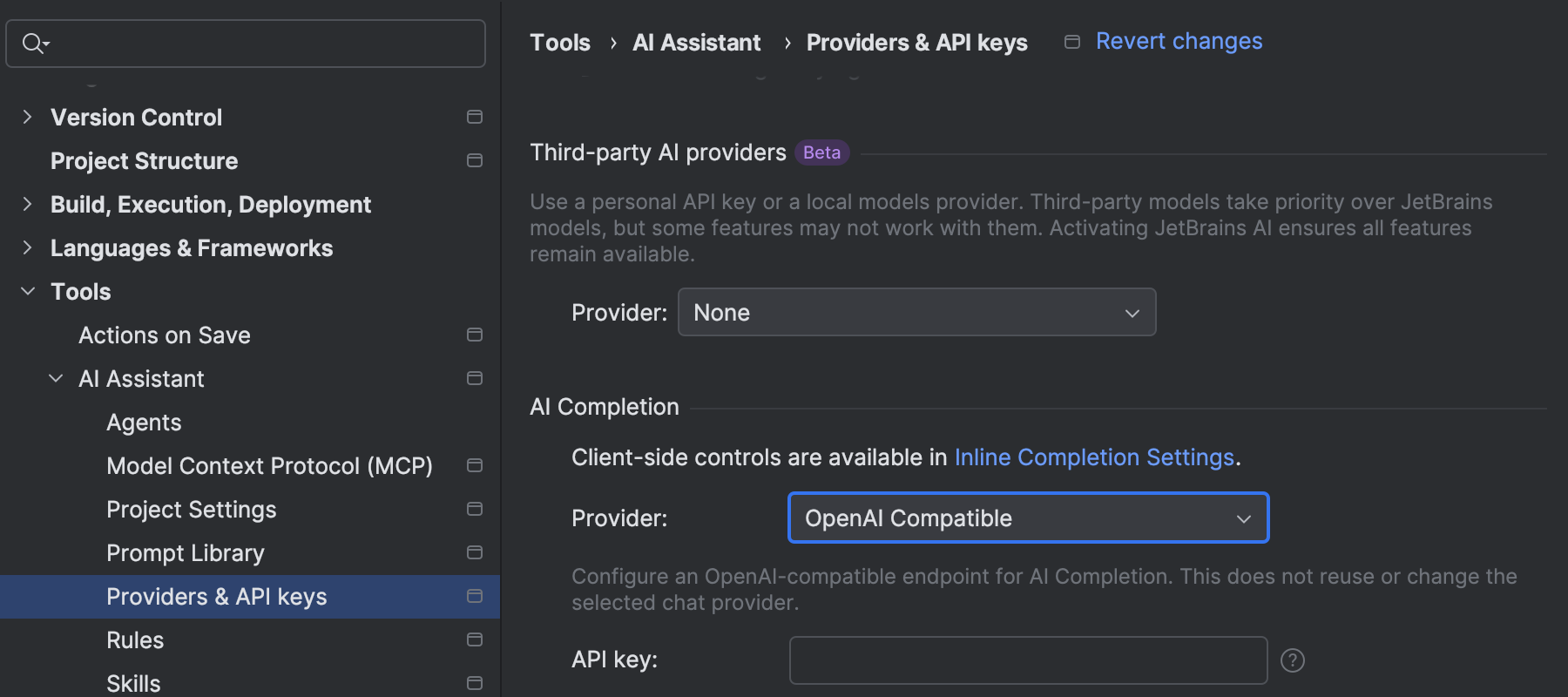
With RubyMine 2026.2, you can now use your own OpenAI-compatible model providers for AI completion, making it easier to integrate your preferred models into your development workflow.
Native GitHub Copilot integration
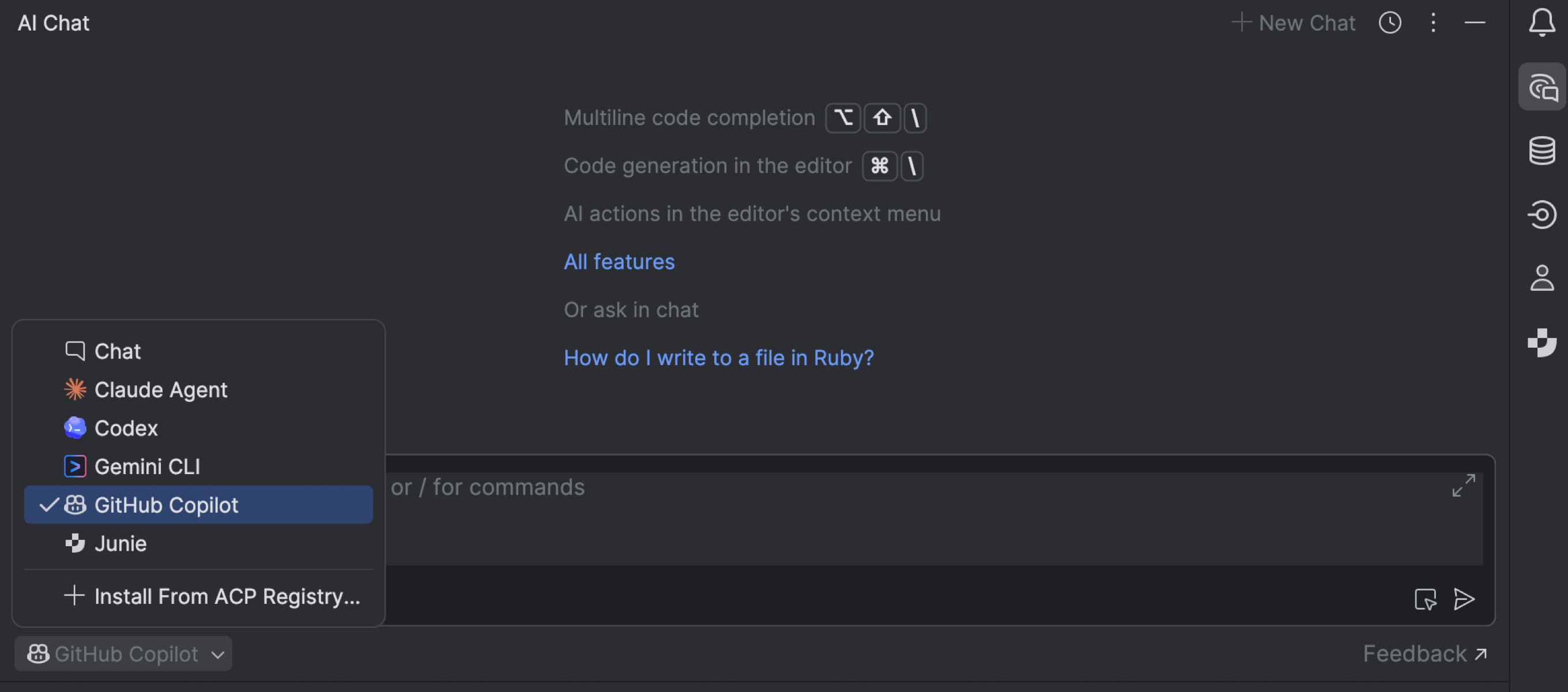
Thanks to our partnership with Microsoft, Copilot is now built into RubyMine and available directly from the AI chat.
Just pick GitHub Copilot from the agent selector, sign in with your GitHub account, and you’re ready to go.
Smarter code insight, now enabled by default
In RubyMine 2026.1, we introduced a new symbol-based code insight engine as an experimental feature. Starting with 2026.2, it’s enabled by default.
The new engine changes how RubyMine understands Ruby classes, modules, and constants, providing more accurate navigation and documentation while serving as the foundation for future improvements.
The new release expands symbol-based modeling across the IDE and makes it even more efficient.
Richer Quick Documentation
Quick Documentation now presents definitions more clearly and displays additional type information whenever it’s available.
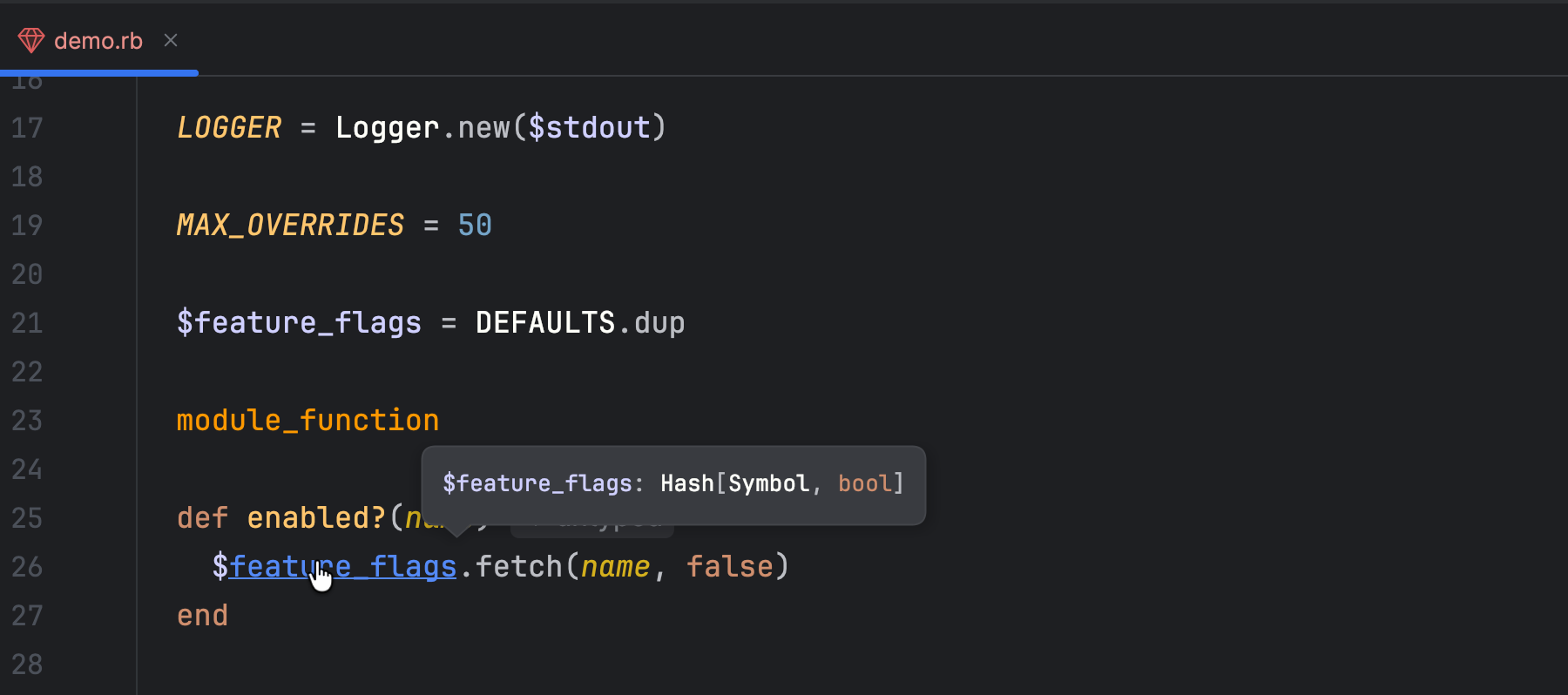
Ctrl/Cmd+Hover has also become more informative and now shows type information for more Ruby symbols, including constants and global variables.
Better support for partially resolved code
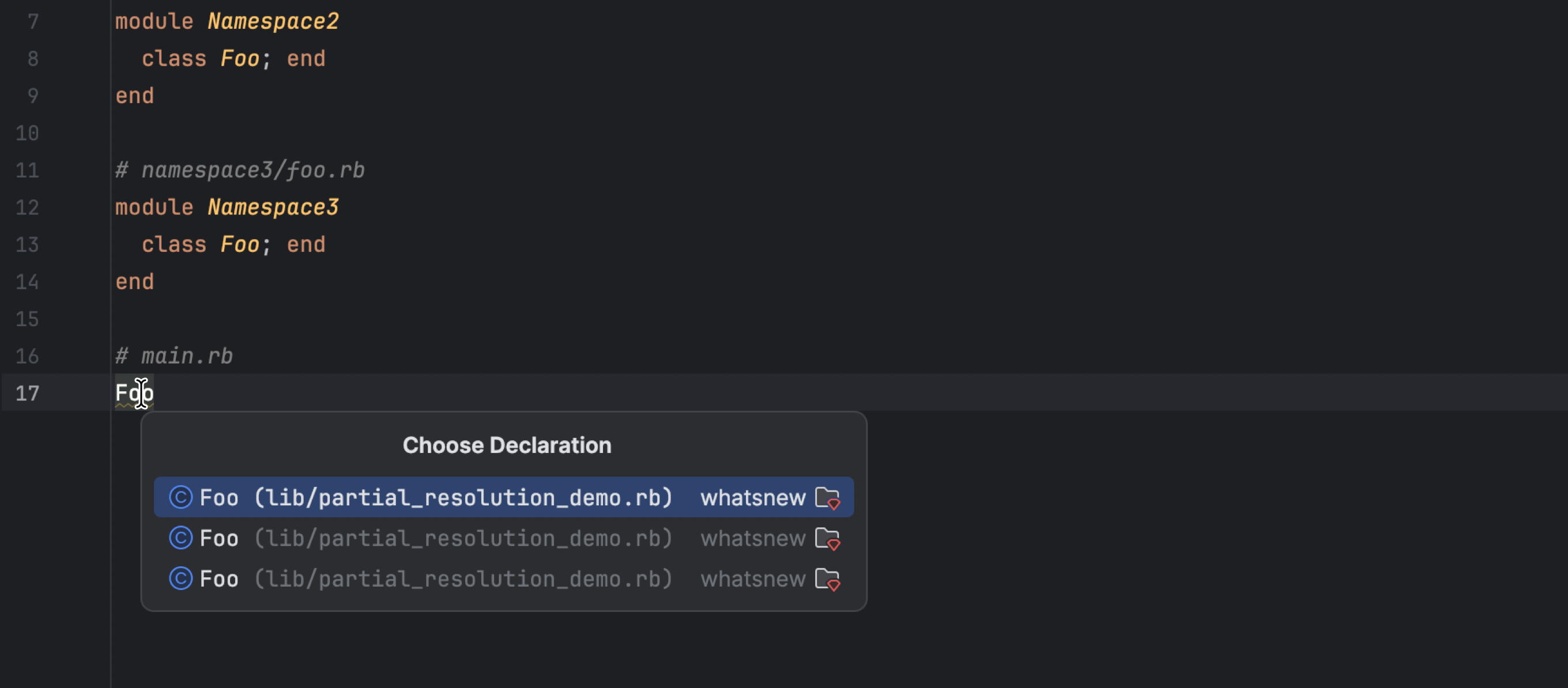
Even if a class, module, or constant cannot be completely resolved, features like Go to Declaration, Find Usages, Rename, and Quick Documentation continue to work whenever meaningful information is available.
Parameter definitions
Parameter definitions now use the same symbol-based modeling as the rest of the engine.
Besides the performance improvements, this also brings more accurate Rename refactoring, better fuzzy completion, and smarter handling of complex names inside string literals.
If necessary, you can still switch back to the previous implementation in Settings | Languages & Frameworks | Ruby | Code Insight.
Ruby ecosystem improvements
Better RBS experience
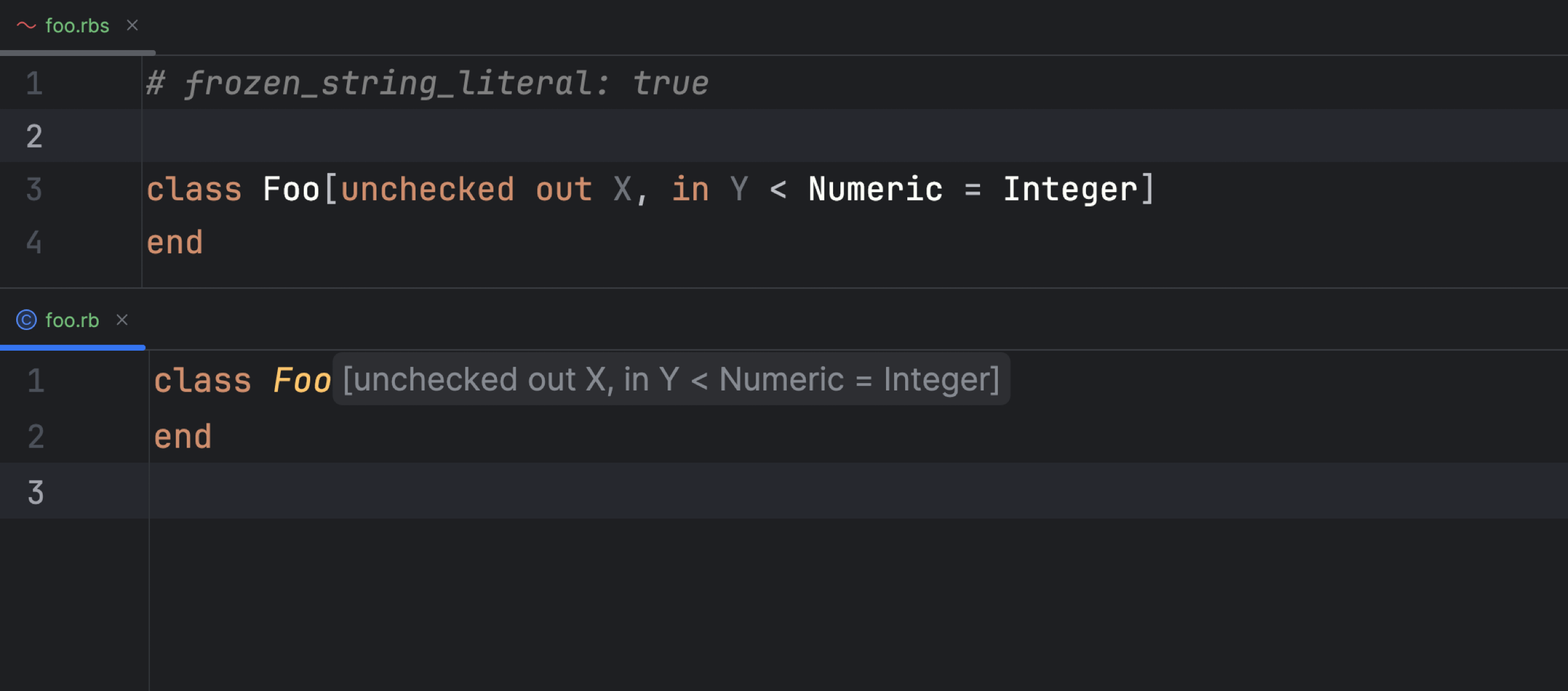
RubyMine 2026.2 brings several improvements to the RBS experience:
- Type parameter hints now display variance modifiers, upper bounds, and default values.
- Module self-types are shown directly in Ruby code.
- Managing RBS hints is easier thanks to new editor actions available directly from the code.
Expanded RSpec 4 support
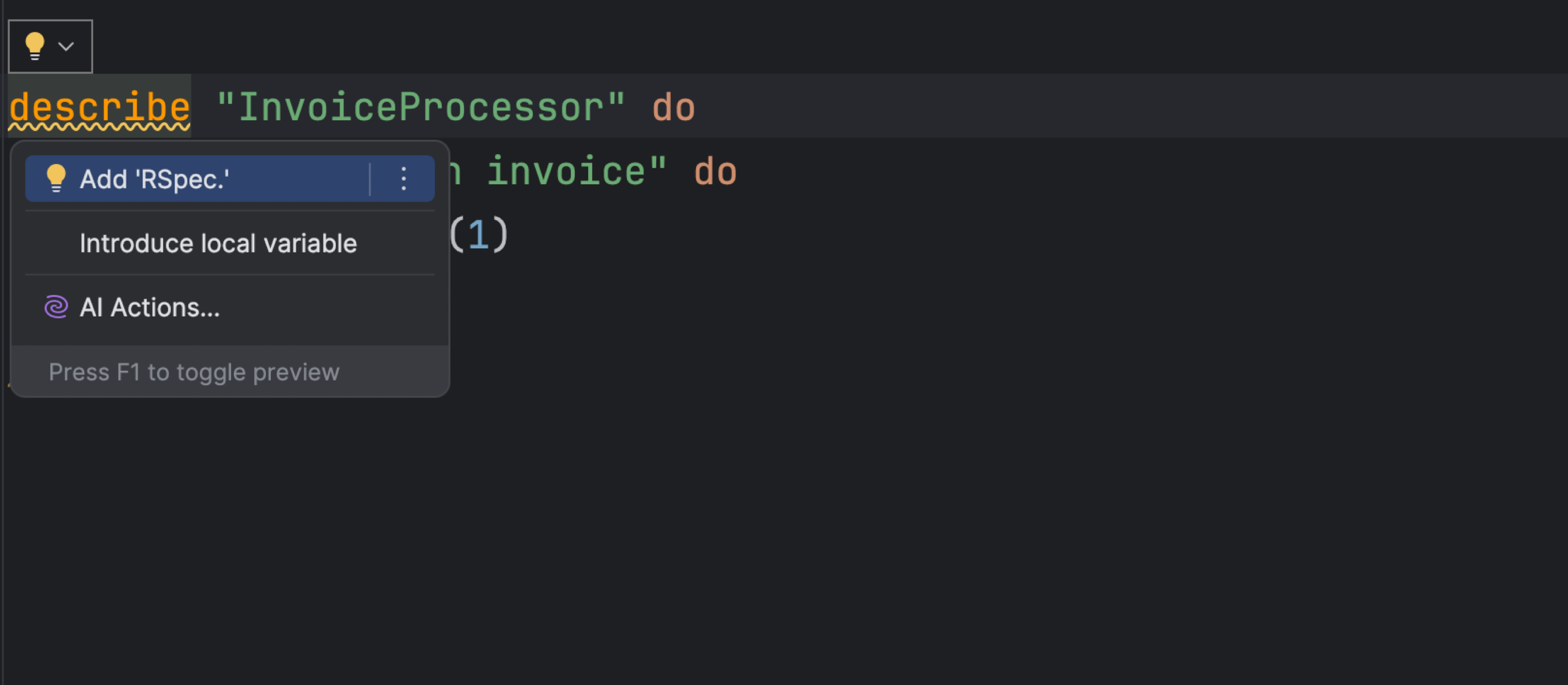
RubyMine now offers broader support for RSpec 4, making it easier to migrate existing projects.
The IDE detects deprecated syntax, highlights compatibility issues, and provides quick-fixes for common upgrade scenarios.
Inspections now cover top-level DSL declarations, deprecated should expectations, and other RSpec 4 compatibility changes, making it easier to modernize test suites before they become a problem.
Skipping non-project code while debugging
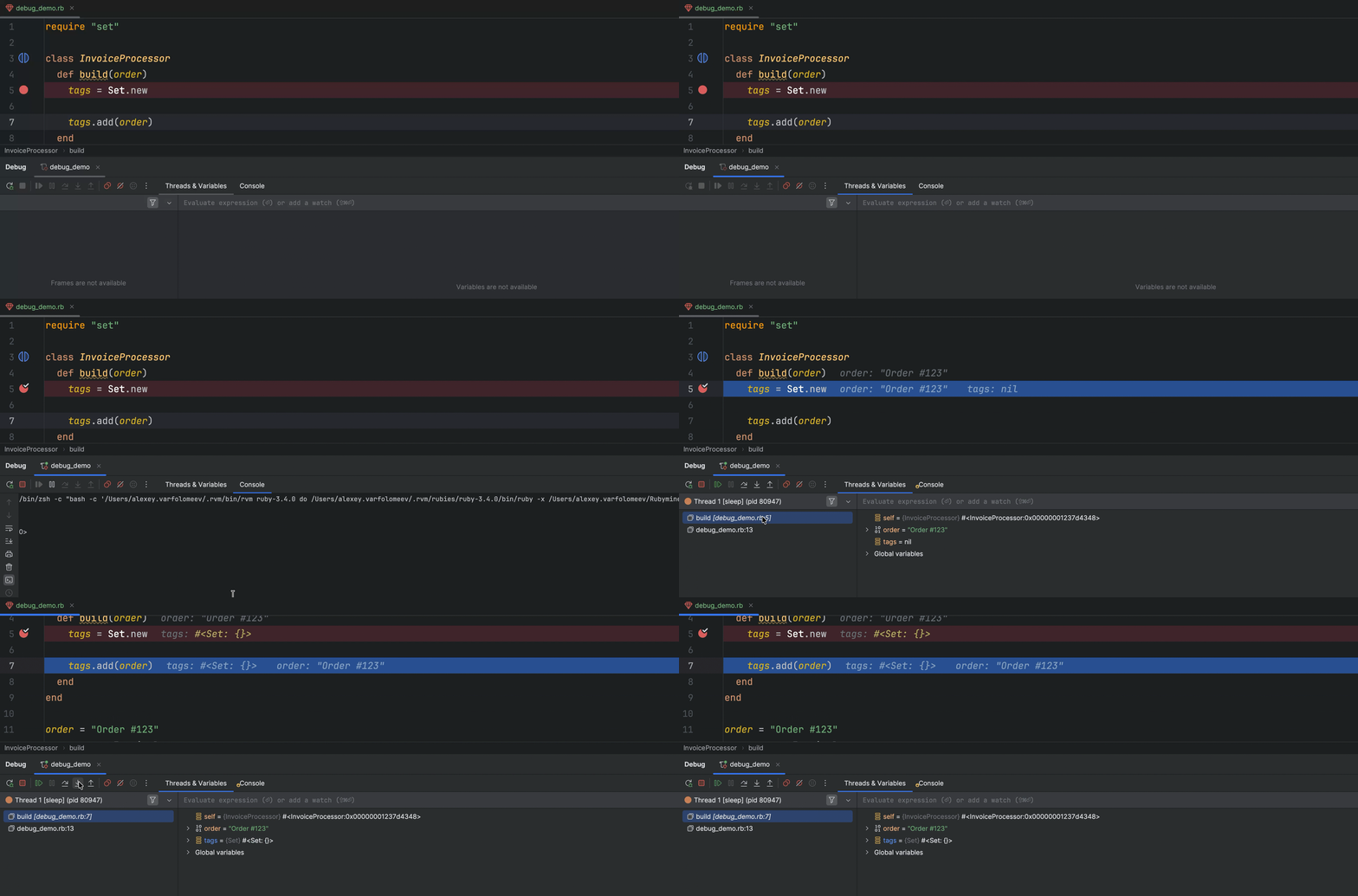
When stepping through code, you usually care about your own application – not framework internals.
The Ignore non-project sources option now works much more reliably. RubyMine skips Ruby standard library code, framework internals, third-party gems, and excluded directories, allowing you to stay focused on the code you’re actually debugging.
The result is less manual stepping and cleaner debugging sessions.
User experience improvements
Faster gem environment updates
Gem environment refreshes now happen in the background, reducing UI freezes and keeping RubyMine responsive while SDK and dependency information is updated.
Simpler project opening
Opening existing projects now requires less manual setup.
RubyMine can automatically detect the appropriate Ruby interpreter from project configuration files, reducing unnecessary setup notifications and helping you get started faster.
More efficient RuboCop processing
Background RuboCop analysis has been optimized to reduce unnecessary CPU usage, improving IDE responsiveness during everyday development.
Stay in touch
To learn about the latest features as they come out, please follow RubyMine on X.
We invite you to share your thoughts in the comments below and to suggest and vote for new features in the issue tracker.
Happy developing!
The RubyMine team