.NET Tools
Essential productivity kit for .NET and game developers
5 Stories Of Developers Using JetBrains Rider to Create, Collaborate, and Have Fun

A year ago, we introduced a free non-commercial use license option for JetBrains Rider, hoping to remove barriers for developers who code with no financial objective in mind for their projects. Recently, we put out a call for your stories – curious to learn how you’ve been using Rider throughout this year.
What came back moved us. From kitchen table coders teaching themselves cross-platform development to seasoned architects reconnecting with why they fell in love with programming in the first place, your stories reminded us that the best code often comes from curiosity, not commerce. Here are five of those stories.
Building a digital board game with AI and Rider
Curiosity has always driven Anton Makarevich’s relationship with technology. Trained as a civil engineer, he taught himself to code out of pure fascination. “I never studied computer science,” he says. “Programming was always a hobby. I started in school, making small games and automation tools just for fun.”
That sense of experimentation never left him. Today, Anton works as a cloud architect, designing large-scale solutions in AWS and Azure. But in his spare time, he still returns to his roots by writing code for the sheer joy of it. His latest project, MakaMek, is a digital adaptation of the classic BattleTech board game, which he’s loved since childhood. Rather than using a traditional game engine, Anton decided to build it entirely with .NET libraries and Avalonia UI – a decision driven by curiosity as much as by his desire for a challenge.
“I really enjoy the process of coding itself. In game engines like Unity or Unreal, you’re mostly connecting assets. I wanted to see how far I could go writing everything myself.”

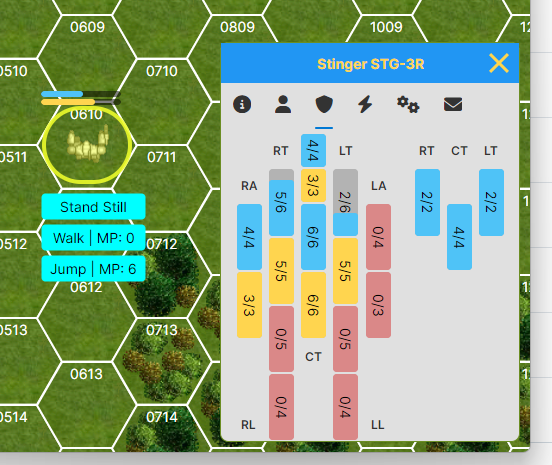
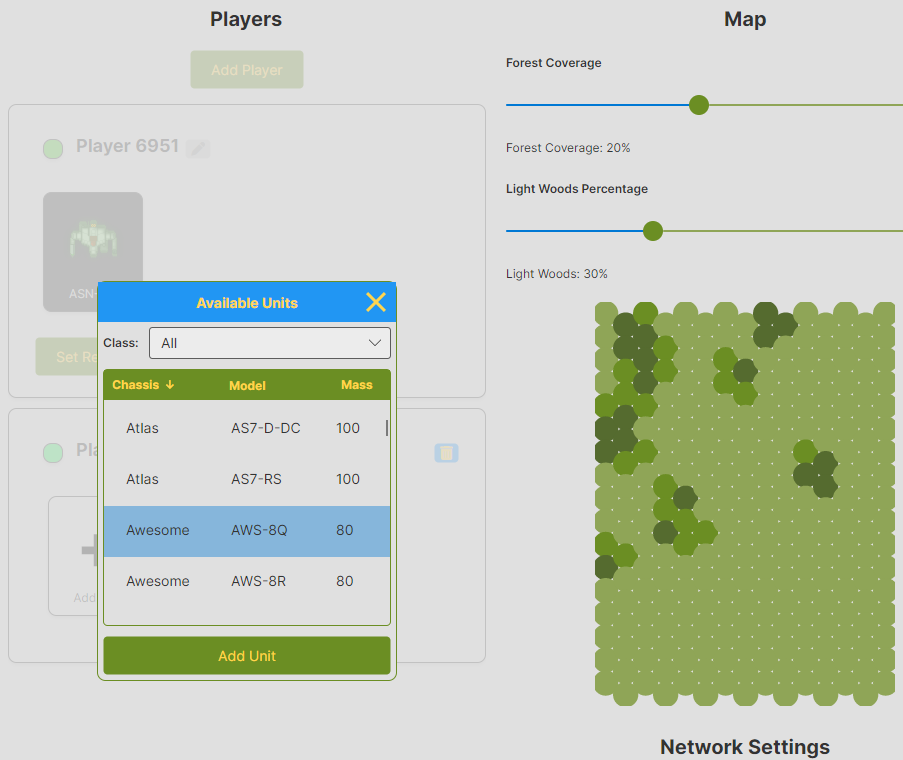
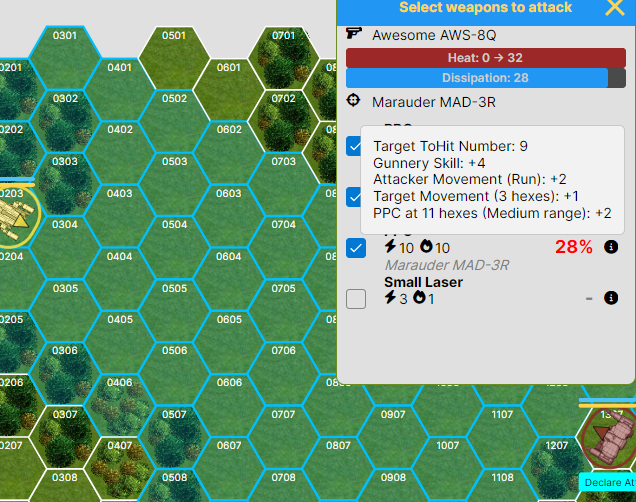
But MakaMek wasn’t just about revisiting a childhood passion. It became a playground for exploring the role of AI in software development. Anton wanted to see if an AI coding assistant could meaningfully contribute to a long-term project without creating chaos in the codebase. “The idea was to see if AI could effectively execute specific coding tasks I gave it,” he explains. “A year later, the code still makes sense, and I can add features easily without breaking things – so I’d say it was a success.”
His workflow became an intricate collaboration between multiple AI agents and JetBrains Rider. He often uses AI to generate specifications or boilerplate code, but then relies on Rider’s refactoring tools to make everything clean, consistent, and reliable.
“AI agents are perfectly capable of refactoring and ensuring the code compiles,” Anton says. “However, very often it takes them much more time and costs a ton of tokens in the process. Rider’s refactoring tools are simply faster at delivering reliable results, and they are predictable.”
For Anton, Rider is more than an IDE. It’s the environment that keeps him connected to his love of programming. With the free non-commercial use license, he can keep exploring that passion on his own terms: “It’s an amazing opportunity to use professional tools even when you’re just experimenting.”
For now, MakaMek remains a personal sandbox project, something Anton occasionally playtests with his son. “It’s not meant for commercial release. Similar open-source versions already exist,” he says. “For me, it’s about keeping my skills sharp, having fun, and remembering why I started coding in the first place.”
Writing novellas – and code! – for connection
For Fabio Scagliola, creativity takes many forms. He’s a software architect by profession, a published novelist, and a musician with four albums to his name. But his latest personal project, Nerdy Weird Words, bridges all those worlds – a digital platform designed to help writers share their drafts privately with a trusted circle of readers.
The idea came from a simple frustration. After finishing his first novel, Fabio wanted feedback from friends and fellow writers without sending files back and forth or resorting to public platforms.
“I couldn’t find anything that struck the right balance between privacy and collaboration. You can use Google Docs, Reddit, or Reedsy, but either it’s too public or too tied to corporate ecosystems. I wanted something intimate, where you invite readers, exchange comments, but stay in control.”

So, he decided to build it himself.
He chose .NET for the backend and React for the frontend – and naturally, JetBrains Rider as his IDE. Fabio had discovered JetBrains products years earlier while working on Java and PHP projects, falling in love with IntelliJ IDEA and PhpStorm before eventually returning to .NET. “After using IntelliJ IDEA, I just couldn’t go back to other IDEs,” he admits. “So when I returned to Microsoft technologies, I chose to go with Rider.”
Fabio finds Rider’s philosophy resonates with him: it’s feature-rich yet flexible, sophisticated yet intuitive. “The keyboard shortcuts just make sense, the workflow feels natural, and it’s not a ‘prison IDE’ the way some others are. You can adapt it to yourself without losing structure,” he says.
When JetBrains announced the free for non-commercial use license, it was the missing piece for his new project. “At work, I use the commercial version through my company,” he explains. “But for my personal projects, I wanted something legal and professional on my own laptop. I was ready to pay if needed, but discovering the non-commercial license was a wonderful surprise.”
Rider has even helped Fabio rediscover his technical fluency. After spending several years focused on architecture, Fabio admits he felt “a bit rusty with .NET and C#.” Rider’s suggestions and warnings, he says, “definitely helped me improve some parts of my code.”
As for Nerdy Weird Words, the project is open-source, a choice rooted in Fabio’s belief in what he calls “inner source” – bringing one’s full skillset and the spirit of open collaboration to any project you work on. “I believe in sharing knowledge,” he says. “That’s how we grow – as teams, as a community, as a society.”
His hopes for the platform are humble but heartfelt. “When someone tells me a song I wrote moved them, or they got lost in my book – that’s the feeling I’m after. This project is an extension of that. So, if even two writers use it to share their work and tell me it helped them, that’s a success to me,” he smiles.
“It’s become an addictive and creative part of my routine”
“I’m a 59-year-old kitchen fitter and self-taught hobby programmer,” Darren Hind begins. “I started learning C# during the COVID lockdown.”
His first project was a practical one – an app to make his work life easier. “It helped me with day-to-day tasks, things like a diary, expenses tracking, scheduling, and invoicing using basic CRUD operations. I first built it with Entity Framework, then recreated it in WinForms, and later moved it to WPF as I learned more.”
When he later bought an iMac, cross-platform limitations pushed him to explore new options. “That’s when I discovered Rider and Avalonia,” he says. “It’s really great that I could get a free non-commercial licence to help me along. I decided to port my app over, which took about a month, and it worked brilliantly across platforms.”
Since then, Darren has continued to experiment. “I’ve started building a Blazor web app in Rider, reusing the same class library from my desktop project. I’m still very much an amateur,” he says, “but the process has been incredibly rewarding.”
“Rider has made it much easier to explore C#, XAML, MVVM, and MySQL at my own pace. What began as a lockdown hobby has become an addictive and creative part of my routine.”

Darren credits Rider’s structure with helping him learn. “Rider keeps everything tidy and consistent, which helps a lot when you’re learning. The way it organizes projects, highlights mistakes, and offers quick-fixes or hints has been a big help in understanding how things fit together,” he explains. “I also like that Rider feels fast and responsive, so I can focus on experimenting instead of fighting with the setup. Little things like instant navigation between files and integrated database tools really help keep the motivation going, because I’m not getting stuck on the technical side. I can just get on with learning.”
Asked what he’s most proud of, Darren points to the architecture of his project. “Writing bits of code is one thing, but understanding how everything bolts together is something else entirely,” he says. “Getting my head around MVVM was a steep learning curve, but when I look at my folder layout now – with shared class libraries for models and data layers – I’m proud that I took the long route. It’s much more maintainable and feels like a proper application.”
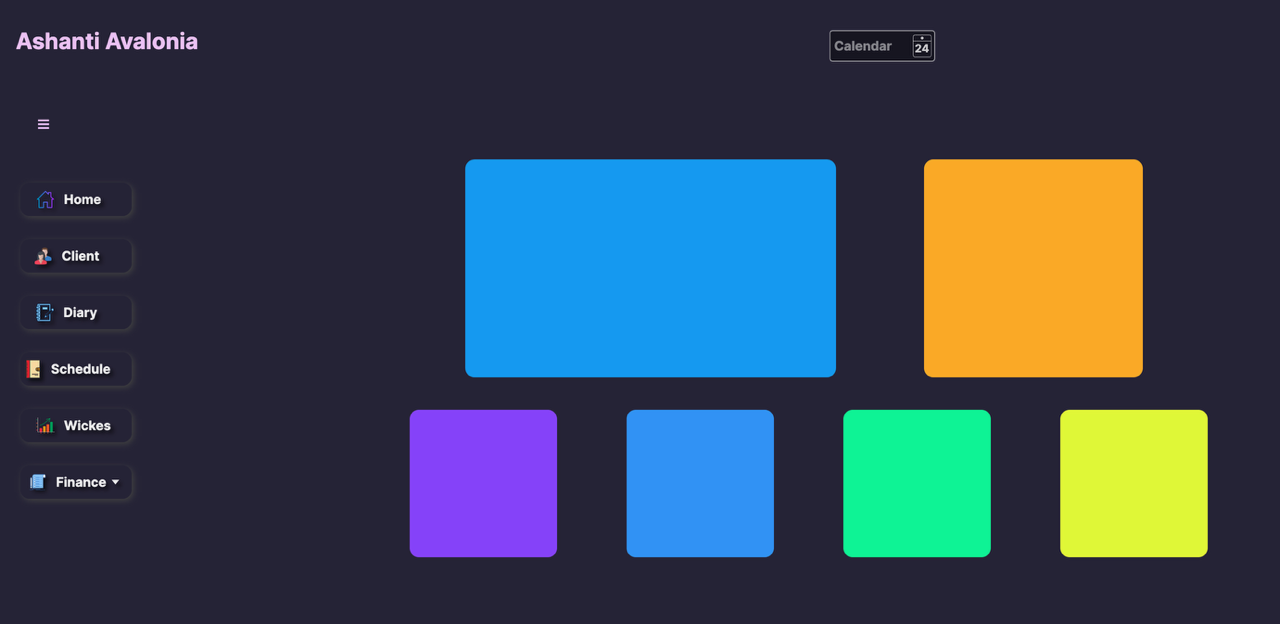
And on the free for non-commercial use license, Darren’s gratitude is plain. “Oh, for sure, I couldn’t be without it now, even if I had to pay for it! It really does remove the barriers for hobby programmers to learn properly.”
A new programming language created with Rider
“I’ve always been curious about how programming languages work, especially C#, which is the one I use and really enjoy,” says Gregori Bruno Felicio, a developer from Brazil, “That’s why I started this project.”
The project is G#, his own programming language built on .NET. Gregori explains. “G# started as a personal study – something small just to learn – but it slowly grew into a serious challenge. It’s still in a very early stage, but my goal is to make it something truly real and usable.”
At first, G# was an experiment. The original goal was to build “a Python-like syntax with .NET power,” but that ambition evolved, and began to take shape as something larger and more structured. Gregori switched to a strongly typed design to keep things consistent and maintainable.
“G# pushed me to learn deep .NET topics like IL generation, reflection, Roslyn internals, and runtime type systems – things we don’t usually touch in everyday work,” he says. “Along the way, I started to really understand why some programming languages make certain design choices, like using {} or ;, or deciding not to. Every small syntax choice adds or removes complexity, and now I see the trade-offs and intentions behind languages that I used to judge just by their syntax.”
Rider has been his constant companion throughout the process. “Honestly, I’ve always been a Rider fanboy,” Gregori laughs.
“Having such a powerful tool makes a big difference. Features like IL Viewer, Type Hierarchy, code inspections, and Structure View help me understand exactly how each part of the compiler and runtime interact. Even in the free version, Rider gives me everything I need to explore G# at a low level.”

For Gregori, the free for non-commercial use license embodies what he loves about the JetBrains community. “I think it’s an amazing idea,” he says. “It’s a great entry point for developers to understand and experiment with the tool without any pressure. Not everyone has access to professional-grade software, and this kind of license really opens the door for people to learn, explore, and create freely. It’s a fantastic way to encourage creativity and innovation.”
A different kind of AI-powered learning tool
When developer Chris Lopes joined Gonzaga University in Spokane, Washington, he soon found himself immersed in a project helping the faculty reimagine how AI could fit into the classroom. And yet, working with two professors – one in English and one in business – he built ZagAI, a learning assistant designed to help educators leverage AI in their teaching safely and intentionally.
The idea originated from the English professor, who had already built a small, custom GPT for his writing classes. “He was very passionate about AI,” Chris recalls. “But there were limitations to that initial setup, because he was relying on students to self-report on their experience”. The professor wanted something more structured and more transparent – and that’s when Chris stepped in.
With his years of experience as a .NET developer, Chris began designing what would become ZagAI. “Since I’m the only developer, Blazor Server offered the best productivity,” he says. “I’m using it for both the frontend and backend, and it’s deployed to Azure. We’re using Cosmos DB as both a document database as well as a vector database, and Azure AI Foundry for all AI interactions.”
The tool allows professors to design assignments that use an AI-assisted Socratic approach. A student’s progress through the assignment is achieved through dialogue, with helpful pointers and questions probing for deeper insight and reflection. This workflow is deliberately different from many other AI learning solutions.
“A lot of tools focus on providing quick answers or forming assessments,” Chris says. “It feeds into concerns professors have about AI – that it’s all shortcuts and no profound learning. What we’re doing feels different. The questions ZagAI asks take effort to work through, but they lead to real learning.”


An unexpected benefit of working with ZagAI has been how the process of setting up an assignment encourages instructors to articulate their teaching philosophy more clearly. “Professors prompt the AI on how to interact with the student and what knowledge to reference,” Chris says. “The prompt can be made to reflect each professor’s individual pedagogical style and their learning objectives. Having to put all that down in the form of instructions for the AI is making them think more deeply about their teaching.”
When it came to development, Rider was an obvious choice for Chris because of its availability on Linux – his OS of choice. “When Rider made a non-commercial license where I could use it without any cost to my current employer, it was like this perfect coming together of things.”
Asked what part of the project he’s most proud of, Chris doesn’t hesitate. “The collaboration,” he says.
“It’s not just a developer building something in isolation. We craft it together – I bring the technical side, they bring the educational side. We’re collaborating and working together to create something that makes a real difference.”

Right now, ZagAI is being used in three classes, with plans to expand in the next semester. “We’re hoping to have about a dozen professors use it in the spring,” he says.
If you have any questions about ZagAI, you can direct them to informatics@gonzaga.edu.
____________________________________________________________________________
Each of these stories began as a spark of inspiration – to experiment, to explore a curiosity, or to make something better. Together, they show what’s possible when professional tools are made available to creative minds everywhere, free of charge.
If you have a story about how JetBrains Rider or any of our other .NET tools have helped you create, learn, or explore new ideas, we’d love to hear from you. Reach out to us at sasha.ivanova@jetbrains.com – we’re always excited to share what our community is building.